
Copyrighted Course MaterialsStandardized content updated according to course objectives.








Course
Critical Thinking Skills
Critical Thinking Skills
Develop the ability to verify information, identify assumptions and biases, and evaluate arguments before forming opinions or making decisions.
Table of Contents
1. Course Overview
In an environment with abundant data, opinions and time pressure, people can easily accept conclusions too early or be influenced by experience and emotion.
The course guides participants to ask the right questions, verify information sources, identify assumptions, analyze arguments and recognize common reasoning errors.
Critical thinking is positioned within business communication, where the goal is to clarify issues rather than win arguments.
2. Training Objectives
- Distinguish facts, opinions, assumptions and conclusions in information.
- Verify data sources and ask questions to clarify issues.
- Identify cognitive biases, fallacies and common reasoning errors.
- Evaluate the logic, relevance and reliability of arguments.
- Present critical responses professionally and apply them to decisions and improvement.
3. Target Participants
- Managers and team leadersAssess information and make decisions in complex situations.
- Analysis, project and improvement specialistsWork with data, root causes and solution proposals.
- Business, marketing and consulting personnelTest assumptions and build persuasive arguments.
- Employees seeking better thinking qualityAvoid premature conclusions and challenge ideas constructively.
4. Course Content
The program combines core concepts, practical tools, scenario discussion and guided exercises to support application in daily work.
PART 01 Critical Thinking Overview
- Concept of critical thinking at work.
- Difference between critical thinking and opposition.
- Role of critical thinking in decision-making.
- Objective thinking instead of emotional judgment.
- Open attitude toward different perspectives.
- Common mistakes in workplace debate.
PART 02 Verifying Information and Facts
- Identify reliable information sources.
- Distinguish facts, opinions and assumptions.
- Check the completeness of evidence.
- Evaluate data relevance.
- Identify noisy or unsupported information.
- Use an information verification checklist.
PART 03 Assumptions and Biases
- Detect hidden assumptions in arguments.
- Identify confirmation bias.
- Avoid hasty inference from personal experience.
- Ask questions about unproven points.
- View issues from multiple perspectives.
- Challenge core assumptions.
PART 04 Evaluating Arguments
- Identify the main claim to evaluate.
- Check the link between reasons and conclusions.
- Distinguish strong and weak arguments.
- Identify common fallacies in meetings.
- Ask questions to clarify other viewpoints.
- Apply the RED model in critical thinking.
PART 05 Professional Critical Dialogue
- Challenge issues, not people.
- Express opinions frankly and respectfully.
- Use data to increase persuasiveness.
- Listen before presenting a different view.
- Use open questions instead of direct negation.
- Practice critical dialogue in meetings.
PART 06 Application to Decisions and Improvement
- Apply critical thinking in problem solving.
- Assess risks before action.
- Compare options using clear criteria.
- Encourage positive debate in teams.
- Learn from ineffective decisions.
- Create a practical application plan.
5. Training Methodology
Classes are conducted in small groups with a learner-centered approach. The facilitator provides concise input, then guides discussion, scenario practice, feedback and debriefing so participants can convert knowledge into applicable workplace behavior.
Group Discussion
Individual Exercises
Group Presentations
Brainstorming Techniques
Facilitated Practice
Experiential Projects
In-Class Activities
Role-Play Activities
Class Presentations
6. Class Information
| Expected Opening Date | Schedule | Time | Location | Tuition Fee | Register |
|---|---|---|---|---|---|
| To be updated | Saturday – Sunday | 08:30 – 16:30 | Ho Chi Minh City | VND 4,500,000 | Register |
| To be updated | Monday – Thursday | 18:00 – 21:30 | Hanoi | VND 4,500,000 | Register |
10% discount for registration at least 15 days in advance, groups of three or more learners, or loyal clients.Reserve a Seat
Note: The opening schedule above is tentative and may be adjusted depending on registration numbers, class organization conditions and the actual training plan. Masterskills will confirm the official schedule with learners before the start date.
- Duration: 2 days / 4 sessions; maximum 35 learners per class.
- Ho Chi Minh City: 224 Dien Bien Phu Street, Ban Co Ward, Ho Chi Minh City.
- Hanoi: 51 Le Dai Hanh Street, Hai Ba Trung Ward, Hanoi.
- In-house corporate training: Delivered at the client’s office or factory; quotation depends on design scope, location and class size.
- Additional costs: Trainer travel and accommodation costs are determined according to the delivery location, if applicable.
7. Learning Materials & Certification
Learners receive copyrighted course materials developed by Masterskills, practice handouts, self-assessment forms and reference materials closely aligned with business situations.
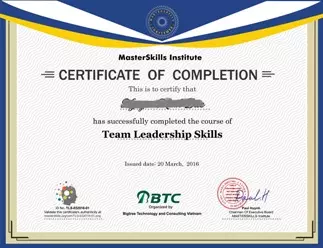
Certificate of Completion
Learners who meet attendance and practice requirements receive a Masterskills certificate of completion.
8. Faculty Team
Masterskills faculty and experts have practical management, consulting and training experience in fields aligned with the program content.

MBA. Paul Huynh
Leadership and capability development expert. Management skills, critical thinking, execution leadership and coaching.

MBA. Nguyen Huu Thai Hoa
Strategy and digital transformation expert. Corporate strategy, digital transformation, business model innovation and growth.
9. Masterskills Profile
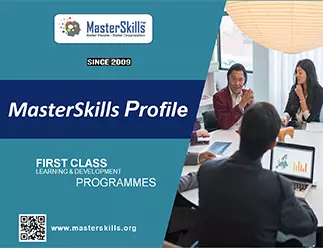
Masterskills’ training capabilities, areas of expertise, delivery methodology and experience partnering with organizations.
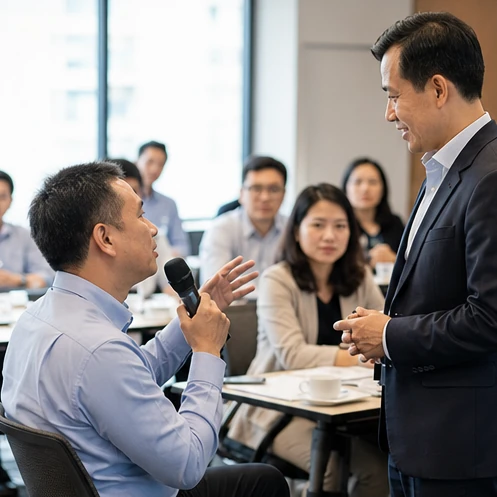
Client Testimonials
View More Client Testimonials“The critical thinking skills course provides practical content, workplace-focused exercises and clear facilitation. The facilitator helps participants use appropriate tools, analyze situations and develop solutions that can be applied after the program.”
10. Representative Clients
Several real training programs with content close to this course topic have been delivered by Masterskills for corporate clients.
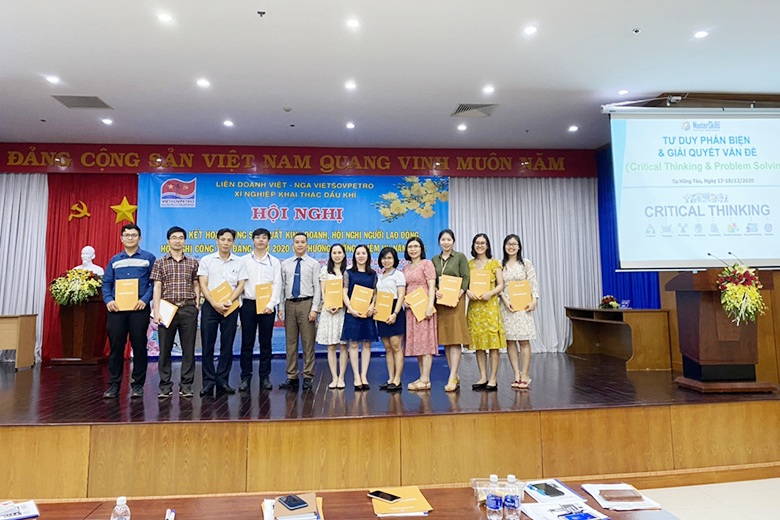 Critical Thinking and Problem-Solving SkillsVietsovpetro Petroleum Exploration Enterprise – Vung Tau
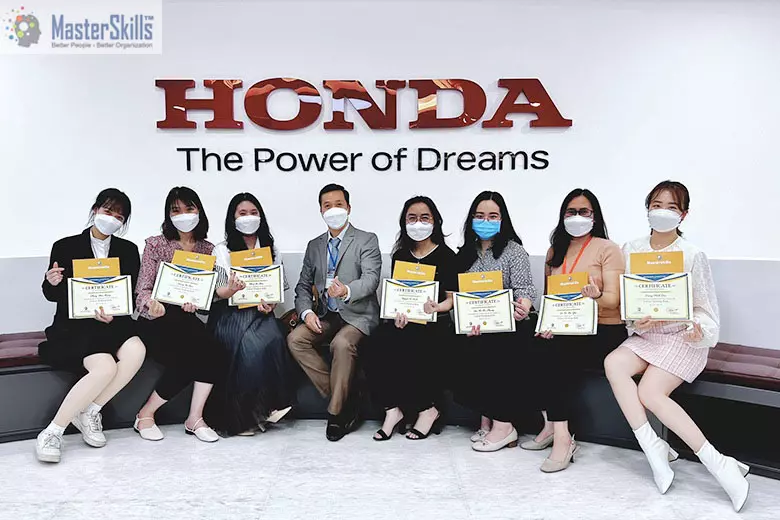 Critical Thinking SkillsHonda Vietnam Company - Ho Chi Minh City
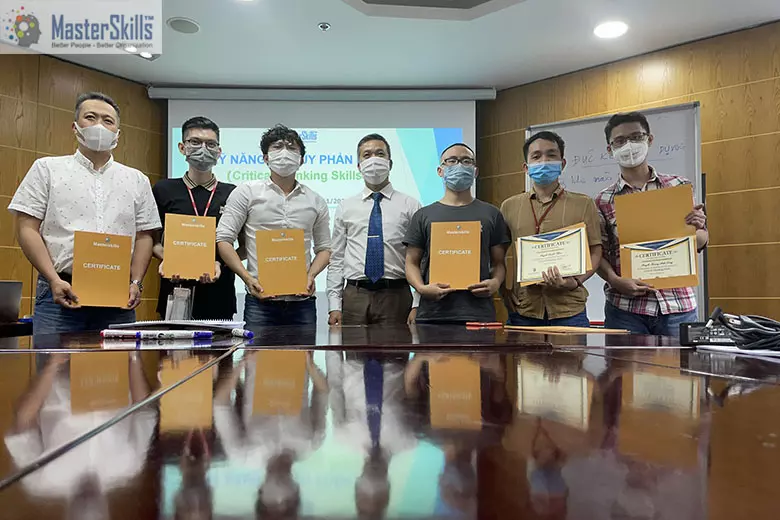 Critical Thinking SkillsAjinomoto Vietnam Company - Ho Chi Minh City
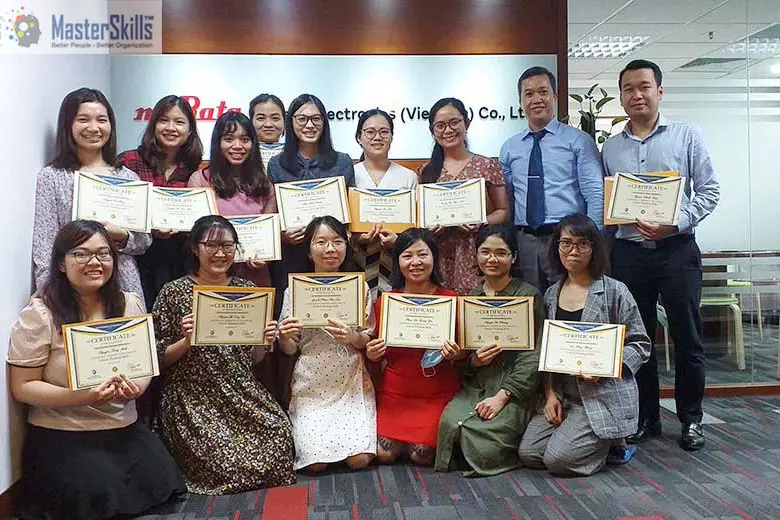 Critical Thinking SkillsMurata Electronics Vietnam Company - Ho Chi Minh City
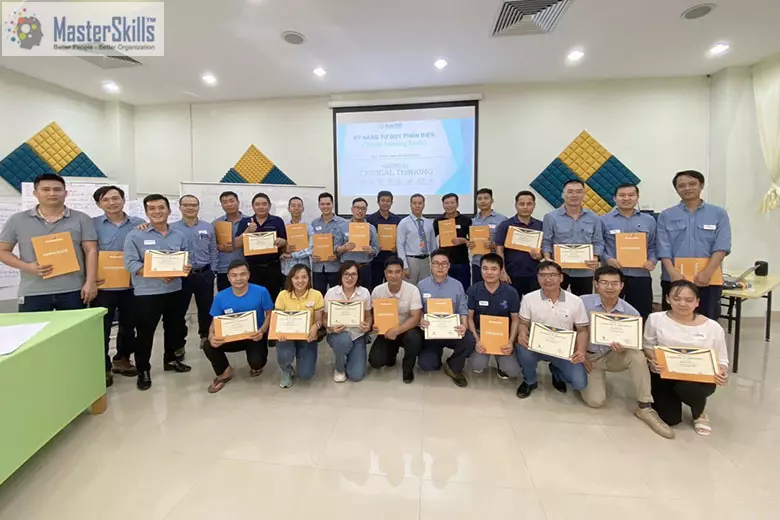 Critical Thinking SkillsAES Mong Duong Power Company - Quang Ninh Province
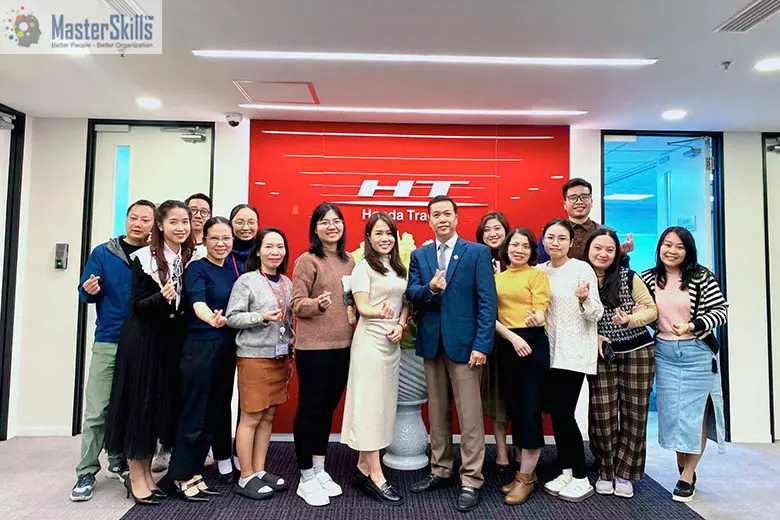 Critical Thinking SkillsHonda Trading Vietnam Co., Ltd. - Ho Chi Minh City
.webp) Problem-Solving and Decision-Making SkillsNew World Hotel (ITC) - Ho Chi Minh City
Problem-Solving and Decision-Making SkillsNew World Hotel (ITC) - Ho Chi Minh City
.webp) Negotiation and Problem-Solving SkillsSapporo Vietnam Company - Ho Chi Minh City
Negotiation and Problem-Solving SkillsSapporo Vietnam Company - Ho Chi Minh City
Related Courses

Logical Thinking SkillsDevelop capabilities skills thinking logic through case practical.

Problem-Solving SkillsDevelop capabilities skills solve problems through case practical.

Decision-Making SkillsDevelop capabilities skills ra decisions through case practical.

Active Listening SkillsDevelop capabilities skills Listen tich cuc through case practical.

Creative Thinking SkillsDevelop capabilities skills thinking creativity through case practical.

The Power of a Positive AttitudeDevelop capabilities suc manh thai do tich cuc through case practical.
Ready to develop critical thinking skills for your team?
Masterskills experts are ready to advise on the critical thinking skills program aligned with your business objectives.