
Copyrighted Course MaterialsStandardized content updated according to course objectives.
Course
Building Corporate Culture
Building Corporate Culture
Support leaders and teams in defining organizational identity, translating core values into behaviors and building a roadmap for sustaining corporate culture.
Table of Contents
1. Course Overview
Corporate culture is reflected in how leaders make decisions, how teams collaborate and which behaviors are encouraged or not accepted.
The course helps participants distinguish layers of organizational culture, define values aligned with business direction and translate each value into observable behaviors.
The program provides a roadmap from assessing current culture to designing, communicating, measuring and improving culture in daily management activities.
2. Training Objectives
- Distinguish corporate culture from isolated communication activities or slogans.
- Identify core values aligned with strategy and organizational identity.
- Translate values into behaviors, standards and concrete examples.
- Clarify the roles of leaders and related groups in culture deployment.
- Build a plan to communicate, sustain, measure and improve corporate culture.
3. Target Participants
- Board members and executive managementSet the organization’s identity, values and operating principles.
- Middle managersTranslate cultural values into team behaviors.
- HR and internal communications teamsDesign activities, communicate and monitor culture implementation.
- Corporate culture project teamsAssess, build and implement culture-change programs.
4. Course Content
The program combines core concepts, practical tools, scenario discussion and guided exercises to support application in daily work.
PART 01 Corporate Culture Foundations
- Concept of corporate culture in organizations.
- Role of culture in business performance.
- Difference between declared culture and lived culture.
- Relationship among values, behaviors and results.
- Layers of culture in organizations.
- Assess the current culture.
PART 02 Defining Core Values
- Clarify mission and vision.
- Identify shared beliefs and principles.
- Select core values aligned with strategy.
- Distinguish real values from slogans.
- Create memorable culture messages.
- Map values, behaviors and impacts.
PART 03 Translating Values into Behaviors
- Describe specific behaviors for each value.
- Identify should-do and should-not-do behaviors.
- Standardize daily workplace conduct.
- Design coordination rules among departments.
- Link cultural behaviors with practical situations.
- Write behavior standards for managers and employees.
PART 04 Leadership Role in Culture
- Leaders model consistent behavior.
- Communicate culture through practical stories.
- Coach frontline managers on culture.
- Recognize people who live shared values.
- Handle behavior that goes against culture.
- Create an environment of trust and accountability.
PART 05 Culture Communication and Engagement
- Design consistent culture messages.
- Integrate culture into onboarding.
- Organize engagement activities aligned with values.
- Share role-model stories in the organization.
- Use internal channels to spread culture.
- Encourage employee participation.
PART 06 Measurement and Continuous Improvement
- Establish indicators for culture health.
- Survey engagement and trust levels.
- Link culture to recruitment, evaluation and recognition.
- Review culture during organizational change.
- Improve organizational behavior through feedback.
- Maintain culture through management systems.
5. Training Methodology
Classes are conducted in small groups with a learner-centered approach. The facilitator provides concise input, then guides discussion, scenario practice, feedback and debriefing so participants can convert knowledge into applicable workplace behavior.
Group Discussion
Individual Exercises
Group Presentations
Brainstorming Techniques
Facilitated Practice
Experiential Projects
In-Class Activities
Role-Play Activities
Class Presentations
6. Class Information
| Expected Opening Date | Schedule | Time | Location | Tuition Fee | Register |
|---|---|---|---|---|---|
| To be updated | Saturday – Sunday | 08:30 – 16:30 | Ho Chi Minh City | VND 4,500,000 | Register |
| To be updated | Monday – Thursday | 18:00 – 21:30 | Hanoi | VND 4,500,000 | Register |
10% discount for registration at least 15 days in advance, groups of three or more learners, or loyal clients.Reserve a Seat
Note: The opening schedule above is tentative and may be adjusted depending on registration numbers, class organization conditions and the actual training plan. Masterskills will confirm the official schedule with learners before the start date.
- Duration: 2 days / 4 sessions; maximum 35 learners per class.
- Ho Chi Minh City: 224 Dien Bien Phu Street, Ban Co Ward, Ho Chi Minh City.
- Hanoi: 51 Le Dai Hanh Street, Hai Ba Trung Ward, Hanoi.
- In-house corporate training: Delivered at the client’s office or factory; quotation depends on design scope, location and class size.
- Additional costs: Trainer travel and accommodation costs are determined according to the delivery location, if applicable.
7. Learning Materials & Certification
Learners receive copyrighted course materials developed by Masterskills, practice handouts, self-assessment forms and reference materials closely aligned with business situations.
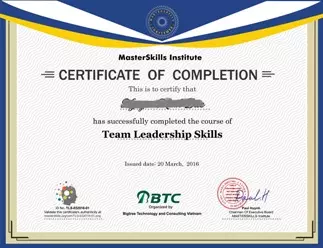
Certificate of Completion
Learners who meet attendance and practice requirements receive a Masterskills certificate of completion.
8. Faculty Team
Masterskills faculty and experts have practical management, consulting and training experience in fields aligned with the program content.
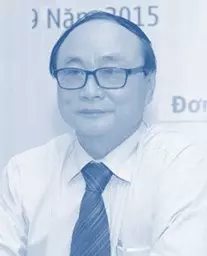
MBA. Dao Hoai Bac
Expert in management people & KPI – BSC. Management performance, KPI, BSC, culture organization and he thong management.

Dr. Thai Tri Dung
Human resource management and behavioral psychology expert. Leadership, managerial psychology, negotiation, culture and organizational behavior.
9. Masterskills Profile
Masterskills’ training capabilities, areas of expertise, delivery methodology and experience partnering with organizations.
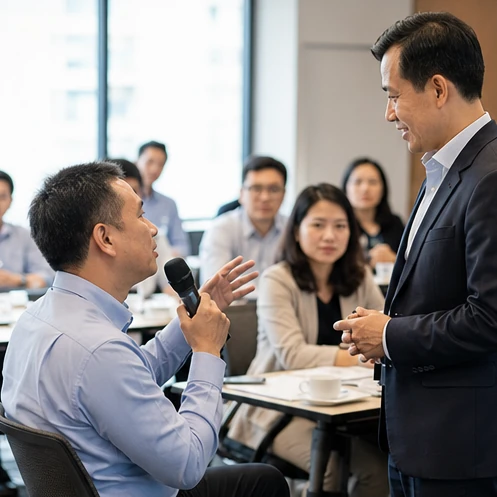
Client Testimonials
View More Client Testimonials“The building corporate culture course provides practical content, workplace-focused exercises and clear facilitation. The facilitator helps participants use appropriate tools, analyze situations and develop solutions that can be applied after the program.”
10. Representative Clients
Several real training programs with content close to this course topic have been delivered by Masterskills for corporate clients.
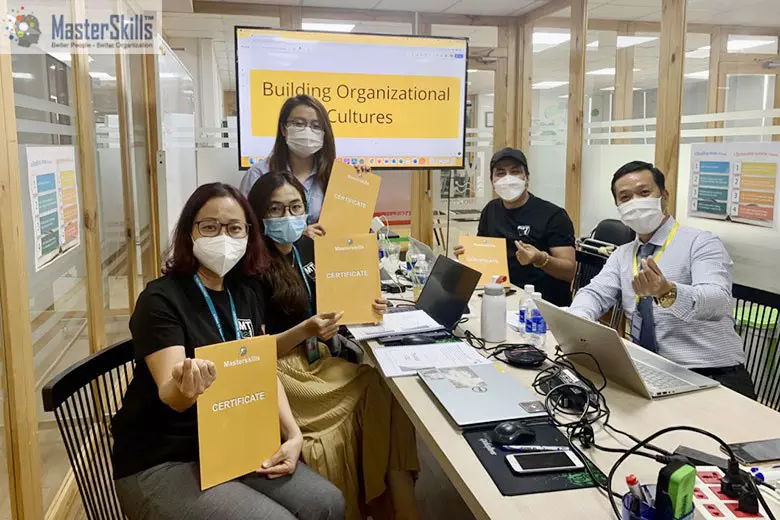 Building Corporate CultureMTI Technology Vietnam Company - Ho Chi Minh City
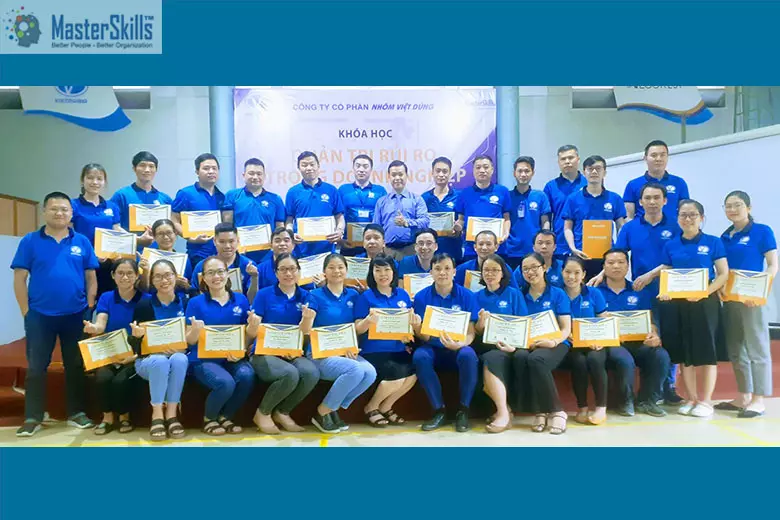 Enterprise Risk ManagementViet Dung Aluminum Joint Stock Company - Ho Chi Minh City
.webp) Industrial Maintenance Management (TPM)ABB Vietnam Company - Bac Ninh
Industrial Maintenance Management (TPM)ABB Vietnam Company - Bac Ninh
Industrial Maintenance Management (TPM)ABB Vietnam Company - Bac Ninh
Industrial Maintenance Management (TPM)ABB Vietnam Company - Bac Ninh
.webp) Industrial Maintenance Management - TPMCompany GoldCoin FeedMill Long An
Industrial Maintenance Management - TPMCompany GoldCoin FeedMill Long An
.webp) Industrial Maintenance Management - TPMCompany Nhien Lieu not (Skypec) - Ho Chi Minh City
Industrial Maintenance Management - TPMCompany Nhien Lieu not (Skypec) - Ho Chi Minh City
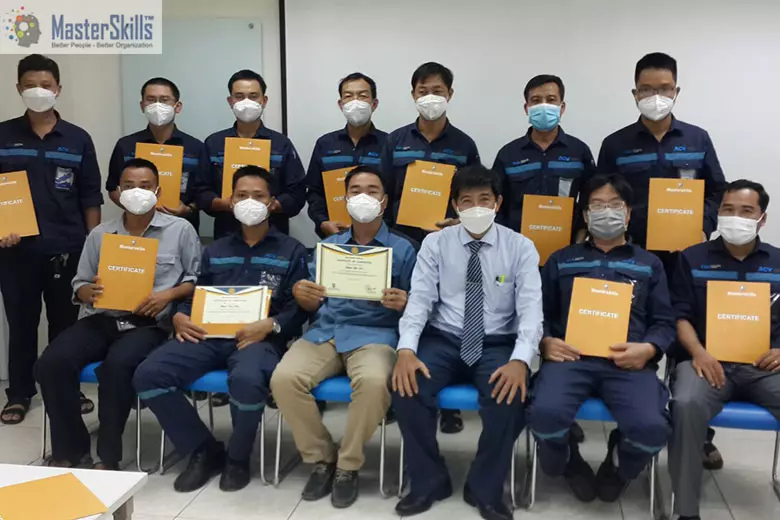 Industrial Maintenance Management - TPMCang not Tan Son Nhat – Ho Chi Minh City
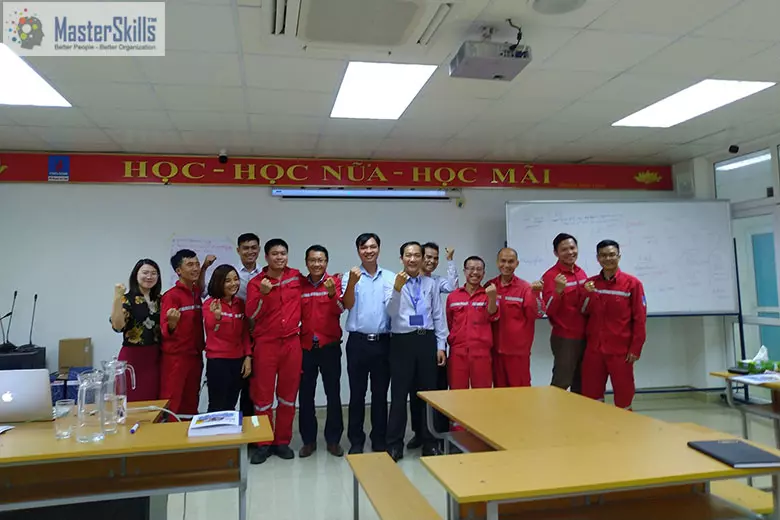 Industrial Maintenance Management (TPM)Ha Consistency Petroleum Power Company - Ho Chi Minh City
Related Courses
Quan Ly and expand BusinessDevelop capabilities managers and expand organization through case practical.

Cross-Cultural CommunicationDevelop practical capability in cross-cultural communication through real-world scenarios.

Business Management and Strategic LeadershipDevelop practical tools and improve workplace effectiveness.

Results Focus and Operational ExcellenceDevelop practical capability in results focus and operational excellence through real-world scenarios.

Thu tuc van hanh chuan SOPDevelop practical capability in standard operating procedures (SOP) through real-world scenarios.

Performance EvaluationDevelop capabilities evaluate effective work through case practical.
Ready to develop building corporate culture for your team?
Masterskills experts are ready to advise on the building corporate culture program aligned with your business objectives.