
Copyrighted Course MaterialsStandardized content updated according to course objectives.








Course
Systems Thinking Skills
Systems Thinking
Help participants see work as interconnected systems, analyze relationships and identify leverage points for better decisions and sustainable improvement.
Table of Contents
1. Course Introduction
Systems Thinking Skills is increasingly important as organizations need practical capability that connects strategy, daily execution and measurable results. Without a structured approach, teams often rely on experience alone, making outcomes inconsistent and difficult to sustain.
This course provides the concepts, tools and practice needed to strengthen systems thinking. Participants learn how to analyze current situations, select appropriate methods and apply them to realistic workplace cases.
The program is designed for practical application. Through discussion, exercises and guided reflection, participants build a clear action orientation and prepare to transfer learning into their own work environment.
2. Learning Objectives
- Explain the core principles and business value of systems thinking.
- Analyze current practices, gaps and risks related to systems thinking foundations.
- Use practical tools and templates to apply identifying system structures and components in workplace situations.
- Coordinate with relevant stakeholders and communicate expectations clearly during implementation.
- Handle common obstacles, deviations or resistance without losing focus on objectives.
- Build an action plan to apply, monitor and sustain improvements after the course.
3. Target Participants
- Business Leaders, Managers and Department HeadsNeed to translate objectives into execution, manage people and improve team performance.
- Middle Managers, Supervisors and Team LeadersDirectly assign work, monitor progress, support employees and handle day-to-day performance issues.
- Project Leaders and Cross-Functional CoordinatorsNeed to align priorities, coordinate stakeholders and ensure follow-through across teams.
- HR, L&D and High-Potential ProfessionalsWant to strengthen practical management capability for current or future leadership roles.
4. Course Content
The six-part course content covers systems thinking foundations, identifying system structures and components, relationships and workflow flows, cause-effect loops and leverage points, unintended consequences and decision-making and systems thinking application plan, moving from foundation to practical workplace application.
PART 01 Systems Thinking Foundations
- Define systems thinking foundations and its role in systems thinking.
- Clarify key concepts, terms and expected outcomes.
- Identify common challenges and failure points in real work.
- Connect the module content with team performance and business results.
- Use a practical checklist or framework to analyze the situation.
- Review workplace examples and discuss lessons learned.
- Practice applying the method through a job-relevant case.
- Summarize key takeaways and actions for implementation.
PART 02 Identifying System Structures And Components
- Define identifying system structures and components and its role in systems thinking.
- Clarify key concepts, terms and expected outcomes.
- Identify common challenges and failure points in real work.
- Connect the module content with team performance and business results.
- Use a practical checklist or framework to analyze the situation.
- Review workplace examples and discuss lessons learned.
- Practice applying the method through a job-relevant case.
- Summarize key takeaways and actions for implementation.
PART 03 Relationships And Workflow Flows
- Define relationships and workflow flows and its role in systems thinking.
- Clarify key concepts, terms and expected outcomes.
- Identify common challenges and failure points in real work.
- Connect the module content with team performance and business results.
- Use a practical checklist or framework to analyze the situation.
- Review workplace examples and discuss lessons learned.
- Practice applying the method through a job-relevant case.
- Summarize key takeaways and actions for implementation.
PART 04 Cause-Effect Loops And Leverage Points
- Define cause-effect loops and leverage points and its role in systems thinking.
- Clarify key concepts, terms and expected outcomes.
- Identify common challenges and failure points in real work.
- Connect the module content with team performance and business results.
- Use a practical checklist or framework to analyze the situation.
- Review workplace examples and discuss lessons learned.
- Practice applying the method through a job-relevant case.
- Summarize key takeaways and actions for implementation.
PART 05 Unintended Consequences And Decision-Making
- Define unintended consequences and decision-making and its role in systems thinking.
- Clarify key concepts, terms and expected outcomes.
- Identify common challenges and failure points in real work.
- Connect the module content with team performance and business results.
- Use a practical checklist or framework to analyze the situation.
- Review workplace examples and discuss lessons learned.
- Practice applying the method through a job-relevant case.
- Summarize key takeaways and actions for implementation.
PART 06 Systems Thinking Application Plan
- Define systems thinking application plan and its role in systems thinking.
- Clarify key concepts, terms and expected outcomes.
- Identify common challenges and failure points in real work.
- Connect the module content with team performance and business results.
- Use a practical checklist or framework to analyze the situation.
- Review workplace examples and discuss lessons learned.
- Practice applying the method through a job-relevant case.
- Summarize key takeaways and actions for implementation.
5. Training Methodology
The class is delivered in small groups with a learner-centered approach. The instructor presents concise concepts, facilitates discussion, leads case practice, provides feedback and helps participants convert knowledge into applied workplace behavior.
Group Discussion
Individual Exercise
Group Presentation
Brainstorming Techniques
Guided Practice with the Instructor
Experiential Project
In-Class Activities
Role-Play Activities
Class Presentation
6. Class Information
| Expected Opening Date | Schedule | Training Hours | Location | Tuition Fee | Register |
|---|---|---|---|---|---|
| To be updated | Saturday – Sunday | 08:30 – 16:30 | Ho Chi Minh City | VND 4,500,000 | Register |
| To be updated | Monday – Thursday | 18:00 – 21:30 | Hanoi | VND 4,500,000 | Register |
10% discount for early registration at least 15 days in advance, groups of three or more participants, or loyal clients.Reserve a Seat
Note:The opening schedule is tentative and may be adjusted based on the number of registered participants, class delivery conditions and the actual training plan. Masterskills will confirm the official schedule with participants before the opening date.
- Duration:2 days / 4 sessions; maximum 35 participants per class.
- Ho Chi Minh City:224 Dien Bien Phu, Ban Co Ward, Ho Chi Minh City.
- Hanoi:51 Le Dai Hanh, Hai Ba Trung Ward, Hanoi.
- Corporate In-House Training:Delivered at the office or factory; pricing is based on design scope, delivery location and class size.
- Additional Costs:Instructor travel and accommodation costs are determined by the delivery location, if applicable.
7. Learning Materials & Certification
Participants receive copyrighted course materials prepared by Masterskills, practice handouts, self-assessment forms and reference materials aligned with business situations.
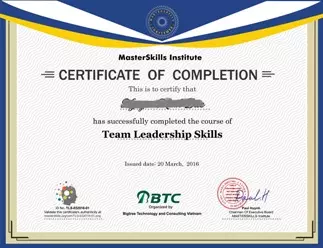
Certificate of Course Completion
Participants who meet attendance and practice requirements are awarded a Masterskills certificate of course completion.
8. Training Faculty
Masterskills instructors and experts have practical management, consulting and training experience in areas relevant to the program content.

MBA. Paul Huynh
Leadership and capability development expert. Management skills, critical thinking, execution leadership and coaching.

MBA. Nguyen Huu Thai Hoa
Strategy and digital transformation expert. Corporate strategy, digital transformation, business model innovation and growth.
9. Masterskills Profile
Masterskills training capabilities, areas of expertise, delivery methodology and experience partnering with organizations.
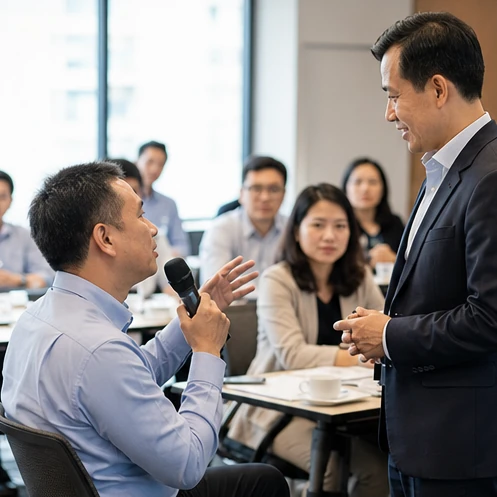
Client Feedback
View More Client Testimonials“The Systems Thinking Skills course provides practical content, work-relevant practice activities and clear facilitation. The instructor helps participants use suitable tools, analyze situations and build options that can be applied after the program.”
10. Representative Clients
Selected practical training programs with content close to this course topic that Masterskills has delivered for corporate clients.
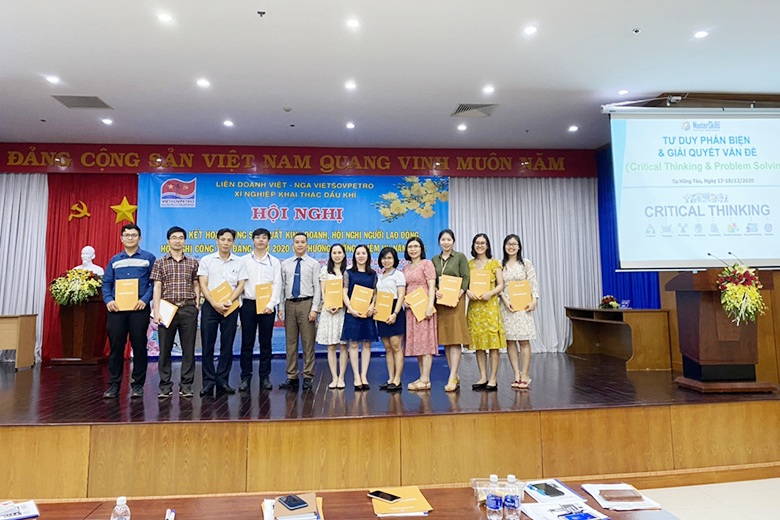 Critical Thinking Skills Va Giai Quyet Van DeXi Nghiep Khai Thac Dau Khi VietsoPetro - Vung Tau
.webp) Negotiation Skills & Giai Quyet Van DeCompany Sapporo Vietnam - Ho Chi Minh City
Negotiation Skills & Giai Quyet Van DeCompany Sapporo Vietnam - Ho Chi Minh City
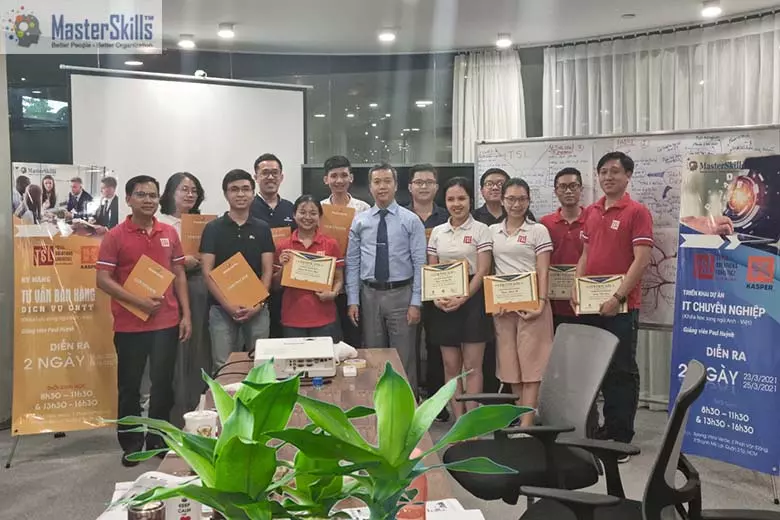 Solution Selling SkillsCompany Giai Phap TSL - Ho Chi Minh City
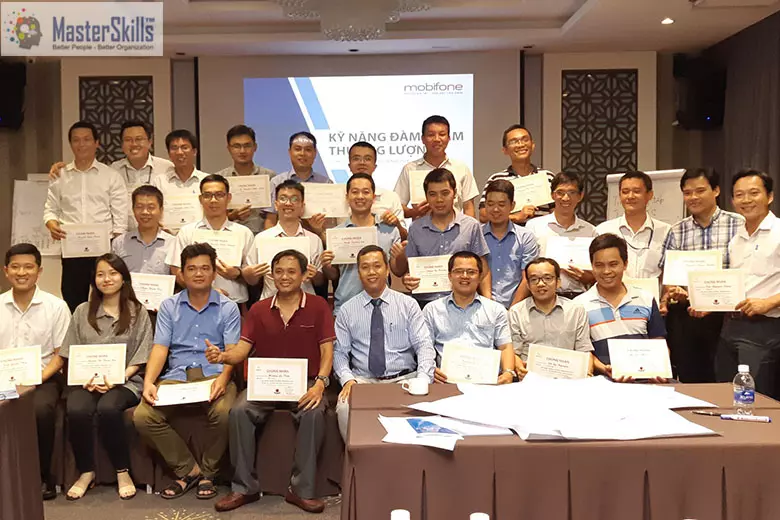 Negotiation and Persuasion SkillsTelecommunications Center MobiFone - Ho Chi Minh City
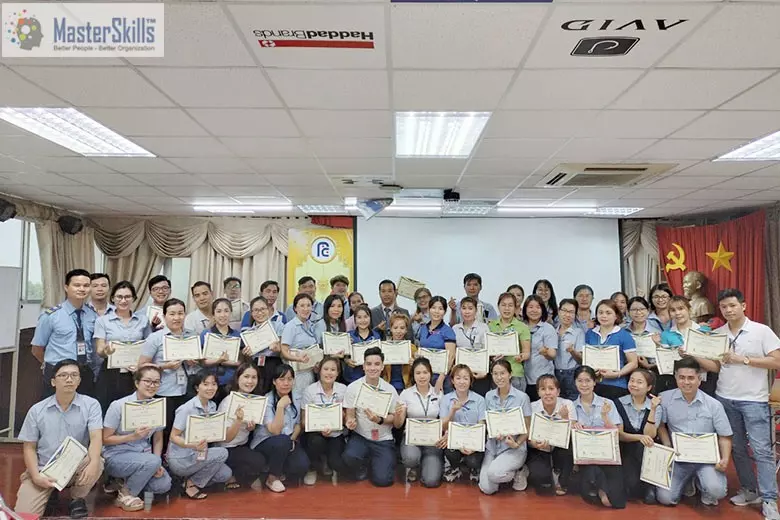 Problem-Solving SkillsCompany Far Eastern Apparel Viet Nam (FEAV) - Tinh Binh Duong
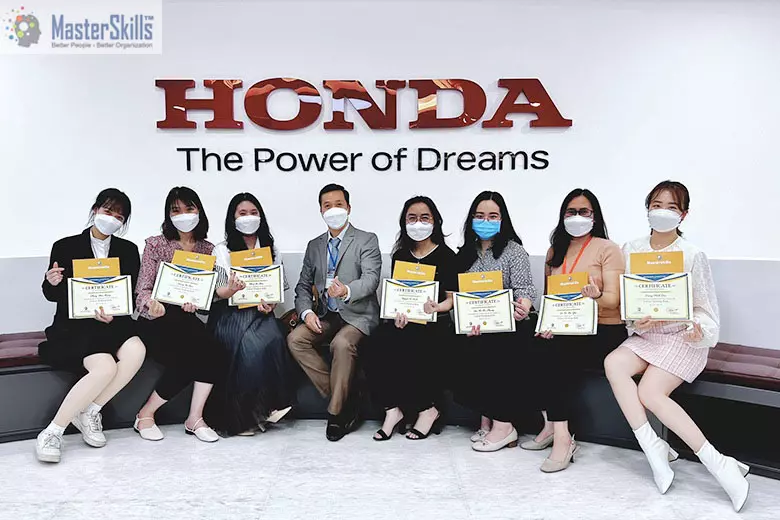 Critical Thinking SkillsCompany Honda Vietnam – Ho Chi Minh City
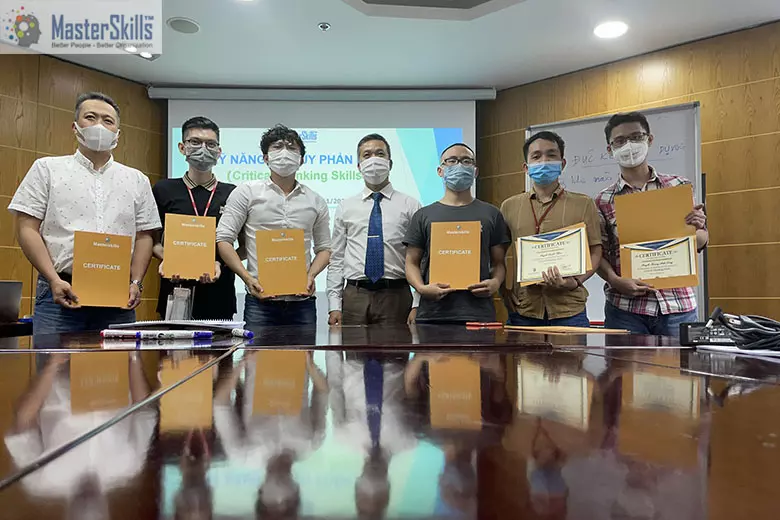 Critical Thinking SkillsCompany Ajinomoto Vietnam – Ho Chi Minh City
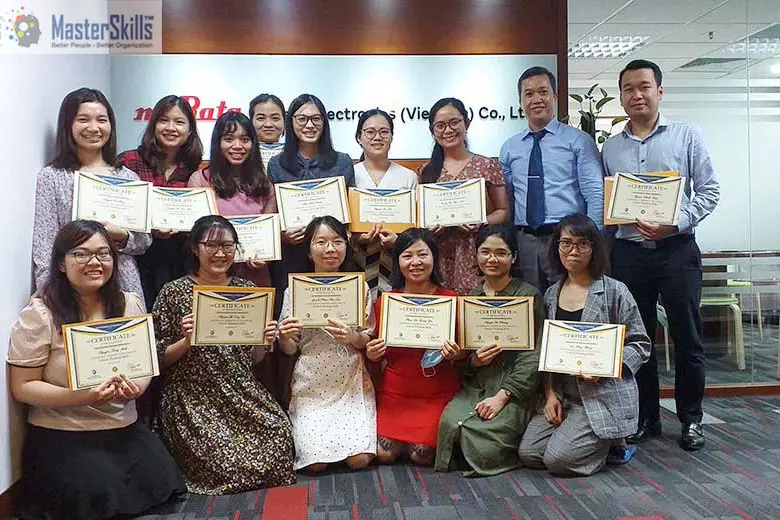 Critical Thinking SkillsCompany Murata Electronics Vietnam – Ho Chi Minh City
Related Courses

Critical Thinking SkillsDevelop capability in critical thinking skills through practical situations.

Problem-Solving SkillsDevelop capability in problem-solving skills through practical situations.

Active Listening SkillsDevelop capability in active listening skills through practical situations.

Logical Thinking SkillsDevelop capability in logical thinking skills through practical situations.

Creative Thinking SkillsDevelop capability in creative thinking skills through practical situations.

The Power of a Positive AttitudeDevelop capability in suc manh thai do tich cuc through practical situations.
Ready to develop systems thinking capability for your team?
Masterskills experts are ready to advise on a Systems Thinking Skills program aligned with your business objectives.