
Copyrighted The MaterialsStandardized content updated according to course objectives.






Course
Building a Blue Ocean Strategy
Building a Blue Ocean Strategy
Guide teams to analyze competitive space, identify noncustomers and design value innovation to open new growth opportunities.
Table of Contents
1. The Introduction
When businesses compete on similar factors, differentiation declines and the cost of competition increases. Blue ocean thinking focuses on redesigning customer value rather than merely trying to outperform competitors within the existing market structure.
The course helps learners use the Strategy Canvas to view competitive factors, discover noncustomer groups and apply the ERRC framework to eliminate, reduce, raise and create value elements. Learners practice building a new value curve linked to feasibility.
The “Building a Blue Ocean Strategy” program focuses on forming a logically grounded strategic proposal rather than creating isolated ideas for differentiation.
2. Training Objectives
- Distinguish blue ocean thinking from competition in existing markets.
- Analyze competitive factors and value curves using the Strategy Canvas.
- Identify noncustomer groups, unmet needs and new value opportunities.
- Apply the ERRC framework to design a differentiated value proposition.
- Evaluate feasibility, build a business model and prepare a strategy implementation plan.
3. Target Participants
- Board members and strategic leadersSeek growth directions and differentiation for the enterprise.
- Business, marketing and brand managersAnalyze markets, customers and value propositions.
- Product, R&D and innovation managersDesign new products, services or business models.
- Strategy, planning and PMO teamsSupport analysis, development and execution of strategic initiatives.
4. The Content
The content moves from blue ocean fundamentals to competitive analysis, noncustomer discovery, ERRC design, value curve development and strategy implementation.
PART 01 Foundations of Blue Ocean Strategy
- Concepts of blue ocean strategy.
- Differences between red and blue oceans.
- Competitive thinking versus market-creating thinking.
- The role of value innovation in strategy.
- The relationship among cost, differentiation and customers.
- Foundational blue ocean strategy models.
- Case: price competition reduces profitability.
- Practice identifying the current competitive market.
PART 02 Market and Competitive Factor Analysis
- Define the industry, segment and customer groups.
- Identify factors customers currently choose from.
- Analyze competitors by value criteria.
- Determine common factors in competition.
- Identify needs that are not well served.
- Use the current strategy canvas.
- Example of an industry with very similar products.
- Practice mapping competitive factors.
PART 03 Discovering Customers Outside the Current Market
- Identify current noncustomer groups.
- Analyze why customers refuse to buy.
- Find barriers that limit market expansion.
- Observe customers’ alternative behaviors.
- Explore hidden needs and major inconveniences.
- Use the three tiers of noncustomers framework.
- Case: a good product with a small market.
- Practice analyzing unserved customer groups.
PART 04 Designing Value Innovation with ERRC
- Eliminate factors that no longer create value.
- Reduce factors that are over-invested.
- Raise factors customers truly value.
- Create factors that have never existed in the industry.
- Balance differentiation and cost effectiveness.
- Apply the four-actions ERRC framework.
- Case: a service has many features but little differentiation.
- Practice building an ERRC matrix.
PART 05 Building the Value Curve and Business Model
- Sketch the new strategic value curve.
- Compare new value with key competitors.
- Define a differentiated value promise.
- Design an appropriate revenue model.
- Check operational feasibility.
- Evaluate risks when changing the value proposition.
- Case: an attractive idea that is difficult to implement.
- Practice drawing a new value curve.
PART 06 Implementing Strategy and Sustaining Advantage
- Prepare a small-scale strategy experiment.
- Communicate new value to customers.
- Allocate resources by strategic priorities.
- Measure market feedback and adjust.
- Handle internal resistance during innovation.
- Sustain market-creation capability.
- Case: a new strategy is copied quickly.
- Practice preparing a blue ocean plan.
5. Training Methodology
The class is organized in small groups with a learner-centered approach. The facilitator delivers concise inputs, then leads discussion, scenario practice, feedback and debriefing so learners can convert knowledge into applicable workplace behaviors.
Group Discussion
Individual Exercises
Group Presentation
Brainstorming Techniques
Facilitator-Guided Practice
Experiential Project
In-Class Activities
Role-Play Activities
Classroom Presentation
6. Class Information
| Expected Start Date | Schedule | Time | Location | Tuition Fee | Register |
|---|---|---|---|---|---|
| To be updated | Saturday – Sunday | 08:30 – 16:30 | Ho Chi Minh City | 4,500,000 VND | Register |
| To be updated | Monday – Thursday | 18:00 – 21:30 | Hanoi | 4,500,000 VND | Register |
10% discount for registration at least 15 days in advance, groups of three or more learners, or loyal clients.Reserve a Seat
Note: The schedule above is tentative and may be adjusted depending on registration numbers, class organization conditions and the actual training plan. Masterskills will confirm the official schedule with learners before the start date.
- Duration: 2 days / 4 sessions; maximum 35 learners per class.
- Ho Chi Minh City: 224 Dien Bien Phu Street, Ban Co Ward, Ho Chi Minh City.
- Hanoi: 51 Le Dai Hanh Street, Hai Ba Trung Ward, Hanoi.
- In-house corporate training: Delivered at the client’s office or factory; quotation depends on design scope, location and class size.
- Additional costs: Trainer travel and accommodation costs are determined according to the delivery location, if applicable.
7. Learning Materials & Certification
Learners receive copyrighted course materials developed by Masterskills, practice handouts, self-assessment forms and reference materials closely aligned with business situations.
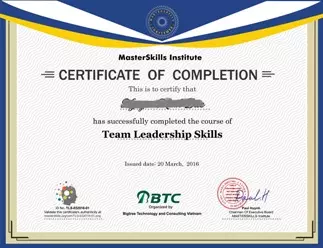
Certificate of Completion
Learners who meet attendance and practice requirements receive a Masterskills certificate of completion.
8. Faculty Team
Masterskills faculty and experts have practical experience in management, consulting and training in fields aligned with the program content.

Prof. Augustine Ha Ton Vinh
Strategy consulting and international management expert. Development strategy, organizational restructuring, public–private investment and project finance.

MBA. Nguyễn Hữu Thái Hòa
Strategy and digital transformation expert. Corporate strategy, digital transformation, business model innovation and growth.
9. Masterskills Profile
Masterskills’ training capabilities, areas of expertise, delivery methodology and experience partnering with enterprises.
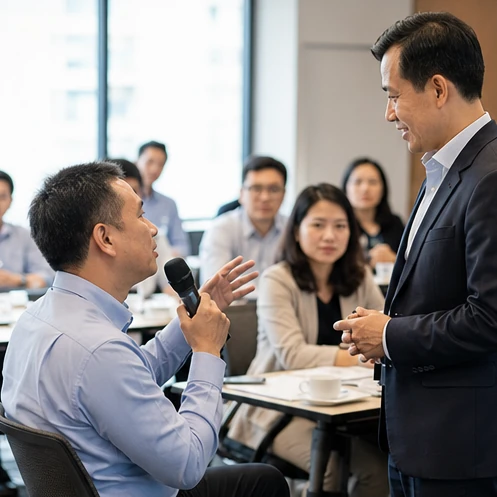
Client Testimonials
View More Client Testimonials“The Building a Blue Ocean Strategy course provides practical content, workplace-relevant activities and clear facilitation. The facilitator helps learners use appropriate tools, analyze situations and develop concrete application plans after the course.”
10. Representative Clients
Selected practical training programs with content related to this course topic have been delivered by Masterskills for corporate clients.
.webp) Strategic Thinking SkillsCompany Toyotsu Safety & Automotive Components Vietnam - Binh Duong Province
Strategic Thinking SkillsCompany Toyotsu Safety & Automotive Components Vietnam - Binh Duong Province
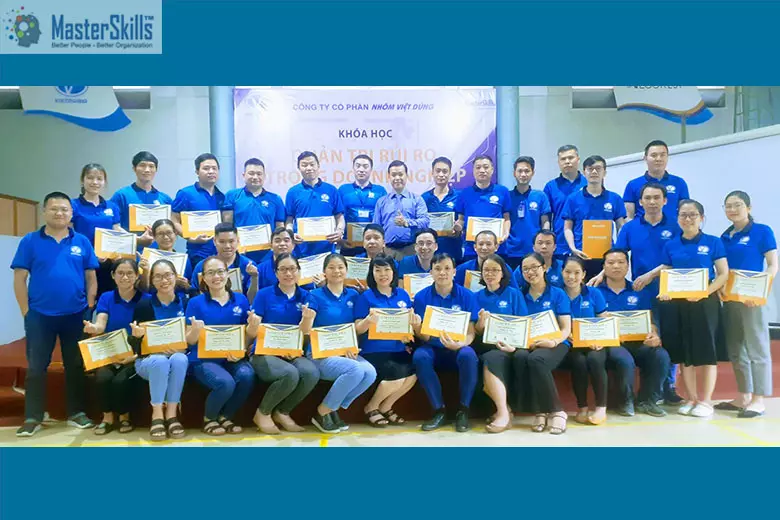 Enterprise Risk ManagementViet Dung Aluminum JSC – Ho Chi Minh City
.webp) Annual Business Planning (AOP)Company JSC May Saigon 3 – Ho Chi Minh City
Annual Business Planning (AOP)Company JSC May Saigon 3 – Ho Chi Minh City
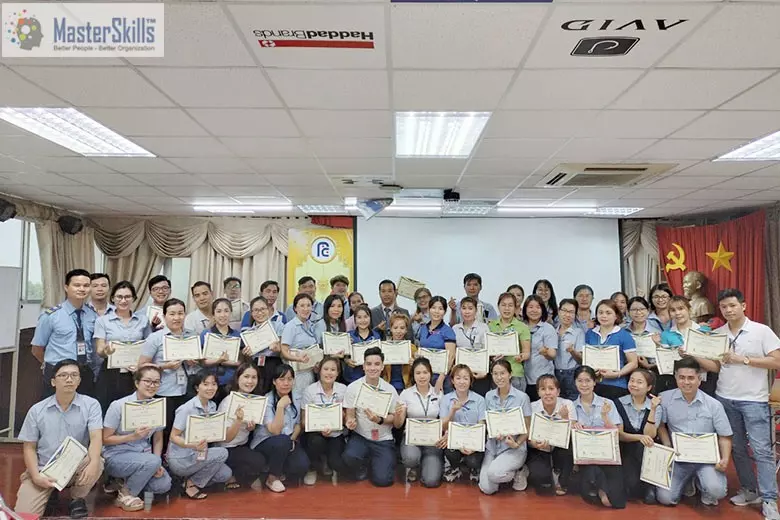 Problem-Solving SkillsCompany Far Eastern Apparel Viet Nam (FEAV) – Binh Duong Province
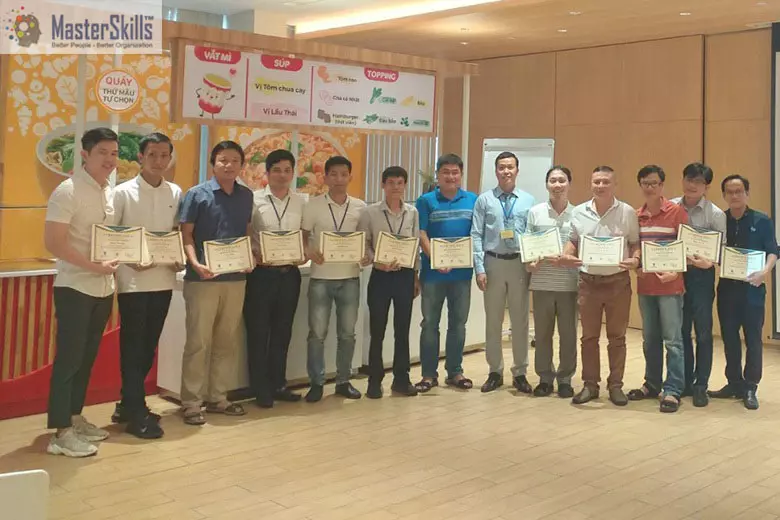 Risk Management and Information SecurityCompany JSC AceCook VietNam – Ho Chi Minh City
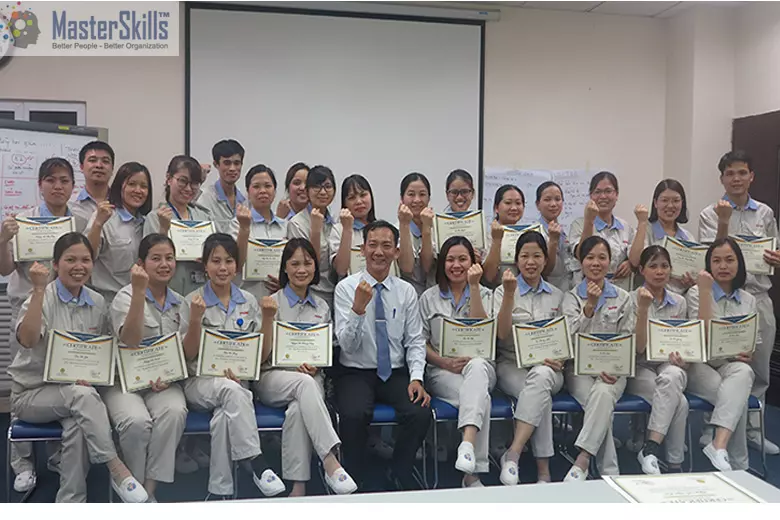 Production Supervision Skills - TWI (Training Within Industry)Company Ltd. Molex VietNam – Ho Chi Minh City
.webp) Industrial Maintenance Management (TPM)ABB Vietnam Company – Bac Ninh
Industrial Maintenance Management (TPM)ABB Vietnam Company – Bac Ninh
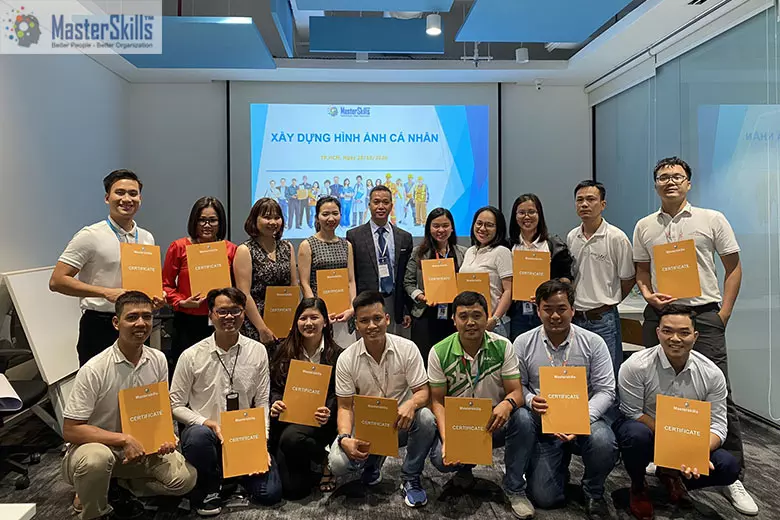 Personal Image BuildingCompany Saint Gobain VietNam – Ho Chi Minh City
Related Courses

Business Innovation and CreativityPractice practical tools and improve workplace effectiveness.

Developing and Executing Strategic PlansPractice practical tools and improve workplace effectiveness.

Building a Positive Work EnvironmentPractice practical tools and improve workplace effectiveness.
Designing an Enduring EnterpriseDevelop enduring enterprise design capability through real workplace scenarios.

Innovation Management and Creative RiskPractice practical tools and improve workplace effectiveness.

Multicultural Workplace CommunicationDevelop practical capabilities through real workplace scenarios.
Ready to develop Building a Blue Ocean Strategy capability for your team?
Masterskills experts are ready to advise on a Building a Blue Ocean Strategy program aligned with your business objectives.