
Proprietary Course MaterialsStandardized content updated according to the course objectives.

Course
Building a Collaborative Culture Based on a Giving Mindset
Building a Collaborative Culture Based on a Giving Mindset
The program helps participants develop practical building a collaborative culture based on a giving mindset capability through structured concepts, business cases, tools and application exercises aligned with organizational needs.
Table of Contents
1. Course Overview
Building a Collaborative Culture Based on a Giving Mindset equips participants with a practical framework to understand the topic, diagnose current challenges and apply relevant tools in real business contexts.
This course combines concise concepts, case discussion and guided exercises so learners can connect building a collaborative culture based on a giving mindset with daily work, team coordination and business results.
By the end of the program, participants can identify improvement priorities, develop practical solutions and prepare an action plan suitable for their organization.
2. Learning Objectives
- Understand the core concepts and business relevance of building a collaborative culture based on a giving mindset.
- Diagnose current practices, challenges and improvement opportunities in the workplace.
- Apply practical tools to analyze cases and real business situations.
- Build a structured approach for decision-making, prioritization and action.
- Communicate ideas clearly and align stakeholders around shared priorities.
- Practice selected techniques through exercises, discussion and group activities.
- Develop an implementation plan suitable for the organization’s context.
- Commit to measurable actions for post-course application and continuous improvement.
3. Target Participants
- Business owners, executives and senior managersNeed to strengthen strategic direction and build consistent implementation capability.
- Functional managers and team leadersResponsible for translating the topic into team practices, routines and results.
- HR, L&D and organizational development professionalsNeed to design learning, communication and capability development initiatives.
- Project teams and cross-functional membersParticipate in implementation, coordination and continuous improvement activities.
- High-potential employees and successorsNeed to develop professional thinking, collaboration and execution capability.
4. Course Content
The program is organized into six practical modules, moving from mindset and business context to tools, practice, implementation and follow-up action.
PART 01 Foundations and Business Context
- Understand the key concepts and business value of building a collaborative culture based on a giving mindset.
- Identify common challenges and opportunities related to the topic.
- Connect the topic with organizational goals, customers and work results.
- Clarify the mindset required for effective application.
- Discuss practical examples from real business situations.
- Recognize barriers that prevent effective implementation.
- Analyze a case that reflects typical workplace challenges.
- Practice identifying the current state and priority issues.
PART 02 Tools, Principles and Working Frameworks
- Explore practical principles and frameworks that support consistent application.
- Use simple tools to diagnose problems and structure thinking.
- Clarify roles, responsibilities and expectations in the process.
- Select suitable criteria for prioritizing actions and decisions.
- Apply checklists and templates to improve work quality.
- Compare good and poor practices through examples.
- Discuss how to adapt the tools to different business contexts.
- Practice using a framework on a realistic case.
PART 03 Communication, Collaboration and Stakeholder Alignment
- Identify key stakeholders and their expectations.
- Communicate objectives, priorities and proposed actions clearly.
- Use active listening and questioning to understand different viewpoints.
- Handle disagreement and feedback constructively.
- Build alignment across functions and team members.
- Encourage ownership and contribution from participants involved.
- Analyze a case involving coordination challenges.
- Practice a structured discussion or presentation activity.
PART 04 Application Practice and Case Analysis
- Work with scenarios that reflect real workplace situations.
- Analyze causes, impacts and possible solution options.
- Evaluate options based on feasibility, value and risk.
- Develop a practical response using the tools introduced.
- Receive feedback from the facilitator and other participants.
- Refine the proposed approach after discussion.
- Connect lessons learned with participants’ current responsibilities.
- Practice building a solution that can be applied at work.
PART 05 Implementation Planning and Performance Follow-Up
- Translate learning points into specific workplace actions.
- Define milestones, resources and responsibilities for implementation.
- Establish indicators to monitor progress and effectiveness.
- Anticipate risks, constraints and support requirements.
- Plan communication and follow-up with relevant stakeholders.
- Use feedback loops to adjust the action plan.
- Discuss common reasons implementation loses momentum.
- Practice preparing a short implementation roadmap.
PART 06 Personal Action Plan and Continuous Improvement
- Review key lessons and personal application opportunities.
- Select practical actions that can be implemented immediately.
- Build individual commitments for post-course application.
- Identify support, resources and follow-up activities needed.
- Create a simple improvement plan for the next work cycle.
- Share action plans and receive peer feedback.
- Define how results will be reviewed after the program.
- Finalize a personal action plan for sustainable improvement.
5. Training Methodology
Classes are organized in small groups with a learner-centered approach. Facilitators provide concise input, then guide discussion, case practice, feedback and learning synthesis so participants can convert knowledge into practical workplace behaviors.
Group Discussion
Individual Exercises
Group Presentation
Brainstorming Techniques
Instructor-Led Practice
Experiential Project
In-Class Activities
Role-Play Activities
Class Presentation
6. Class Information
| Estimated Start Date | Schedule | Class Time | Location | Tuition Fee | Register |
|---|---|---|---|---|---|
| To be updated | Saturday – Sunday | 08:30 – 16:30 | Ho Chi Minh City | VND 4,500,000 | Register |
| To be updated | Monday – Thursday | 18:00 – 21:30 | Hanoi | VND 4,500,000 | Register |
10% discount: for registrations made 15 days in advance, groups of 3 or more participants, or loyal clients.Reserve a Seat
Note: The schedule above is tentative and may be adjusted depending on registration volume, class delivery conditions and the actual training plan. Masterskills will confirm the official class schedule with participants before the start date.
- Duration: 2 days / 4 sessions; maximum 35 participants per class.
- Ho Chi Minh City: 224 Dien Bien Phu Street, Ban Co Ward, Ho Chi Minh City.
- Hanoi: 51 Le Dai Hanh Street, Hai Ba Trung Ward, Hanoi.
- Corporate In-House Training: Delivered at the client’s office or factory; quotation depends on the program scope, location and class size.
- Additional Costs: Instructor travel and accommodation costs are determined based on the delivery location, where applicable.
7. Learning Materials & Certification
Participants receive proprietary course materials developed by Masterskills, practical hand-outs, self-assessment templates and reference materials aligned with business situations.
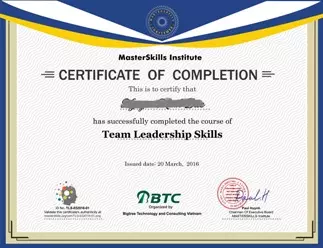
Certificate of Course Completion
Participants who meet attendance and practice requirements will receive a Masterskills certificate of program completion.
8. Training Faculty
Masterskills facilitators and experts have practical management, consulting and training experience in fields aligned with the program content.

TS. Thái Trí Dũng
Expert in human resource management and behavioral psychology. Specializes in leadership, management psychology, negotiation, culture and organizational behavior.

MBA. Paul Huỳnh
Expert in leadership and capability development. Specializes in management skills, critical thinking, execution leadership and coaching.
9. Masterskills Capability Profile
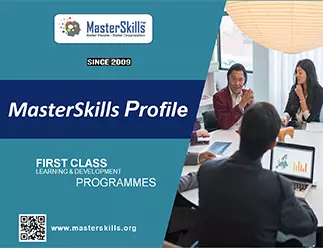
Masterskills training capabilities, areas of expertise, delivery methodology and experience partnering with organizations.
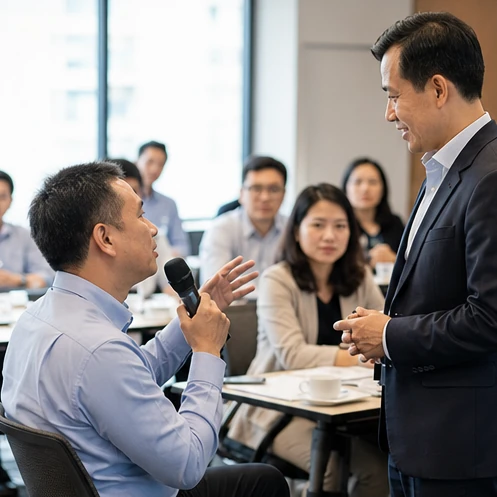
Client Testimonials
View More Client Testimonials“The Building a Collaborative Culture Based on a Giving Mindset course offers practical content, workplace-relevant activities and clear facilitation. The facilitator helps participants use appropriate tools, analyze cases and develop solutions they can apply at work after the program.”
10. Representative Clients
Selected practical training programs with content related to this course topic that Masterskills has delivered for corporate clients.
.webp) Effective Communication SkillsCompany Thuong Mai Phuong Long - Ho Chi Minh City
Effective Communication SkillsCompany Thuong Mai Phuong Long - Ho Chi Minh City
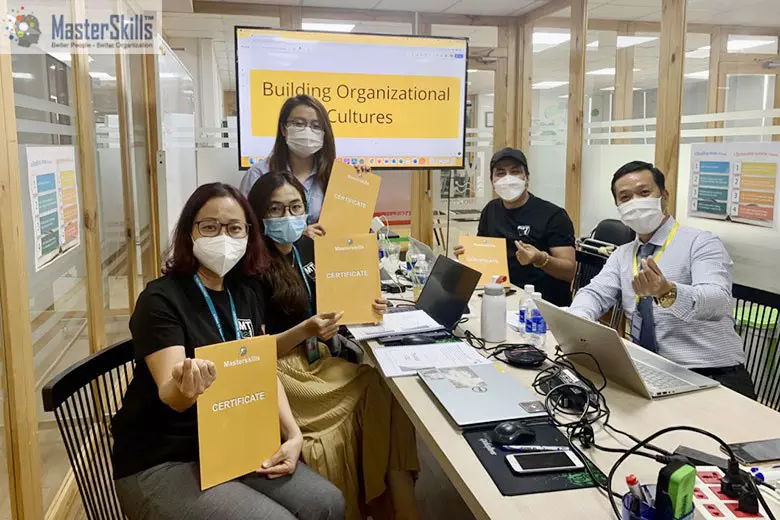 Building Corporate CultureCompany MTI Technology Vietnam - Ho Chi Minh City
.webp) Communication Skills for Production TeamsCompany Dopla Chau A - Vung Tau
Communication Skills for Production TeamsCompany Dopla Chau A - Vung Tau
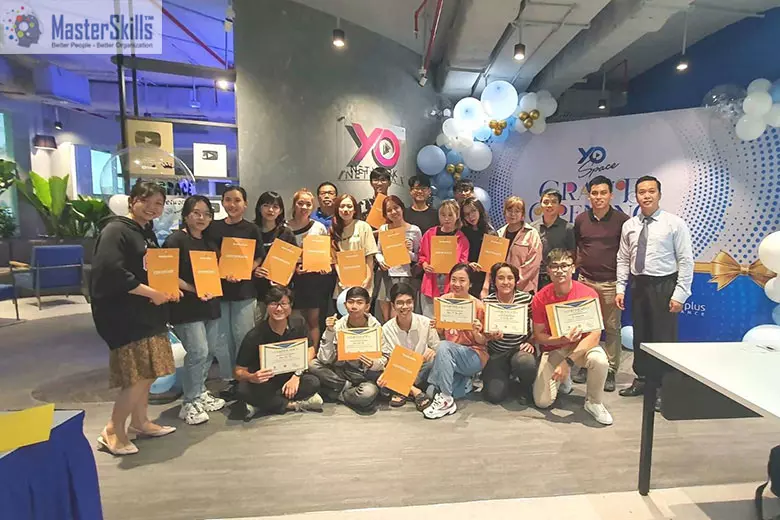 Communication & Emotional Control SkillsJoint Stock Vien Thong Tuoi Tre - Ho Chi Minh City
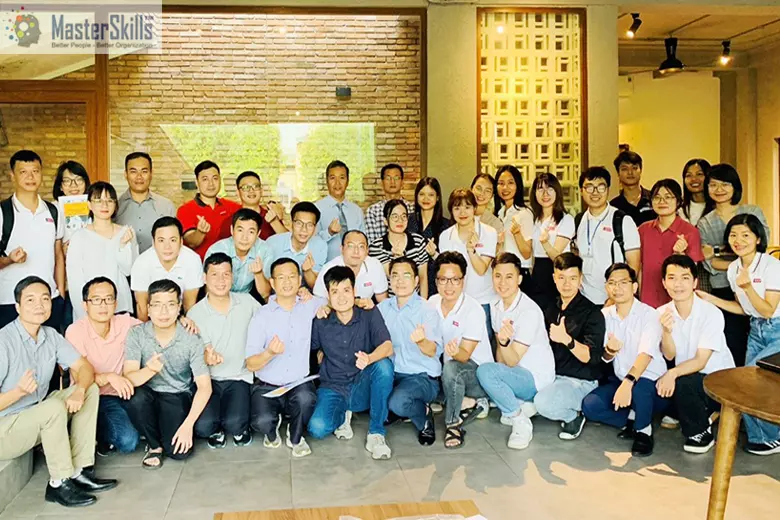 Communication & Customer Service SkillsCompany CP DV iERP – Hanoi
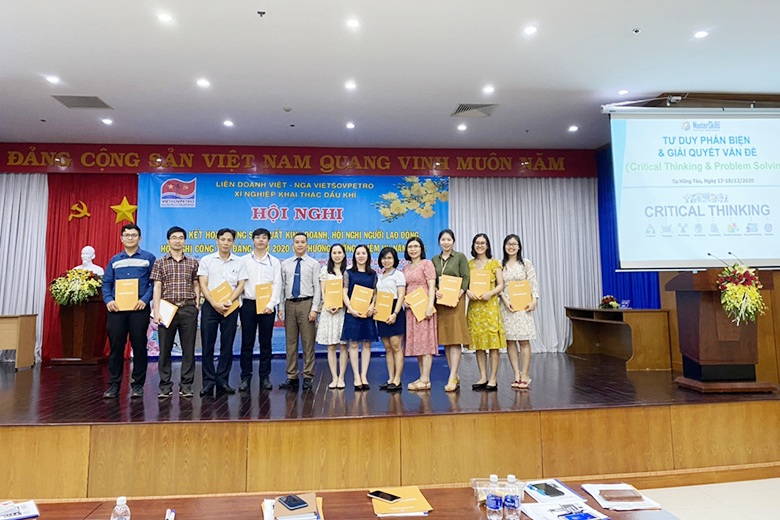 Critical Thinking and Problem-Solving SkillsXi Nghiep Khai Thac Dau Khi VietsoPetro - Vung Tau
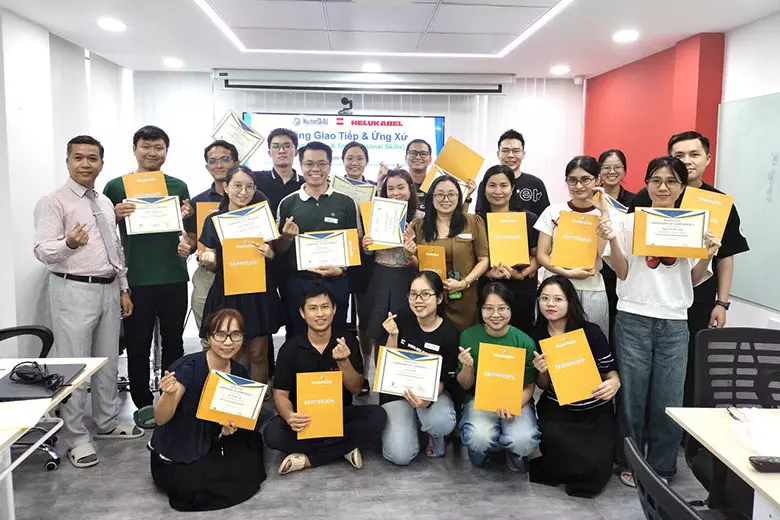 Communication and Interpersonal SkillsCompany HELUKABEL Vietnam – Ho Chi Minh City
.webp) Team Spirit and TeamworkCompany Ant Farm Vietnam – Ho Chi Minh City
Team Spirit and TeamworkCompany Ant Farm Vietnam – Ho Chi Minh City
Related Courses

Communication in Multicultural EnvironmentsDevelop communication moi truong da culture capability through practical business scenarios.

Building a Culture of Ownership, Results and DisciplinePractice practical tools and improve work effectiveness.
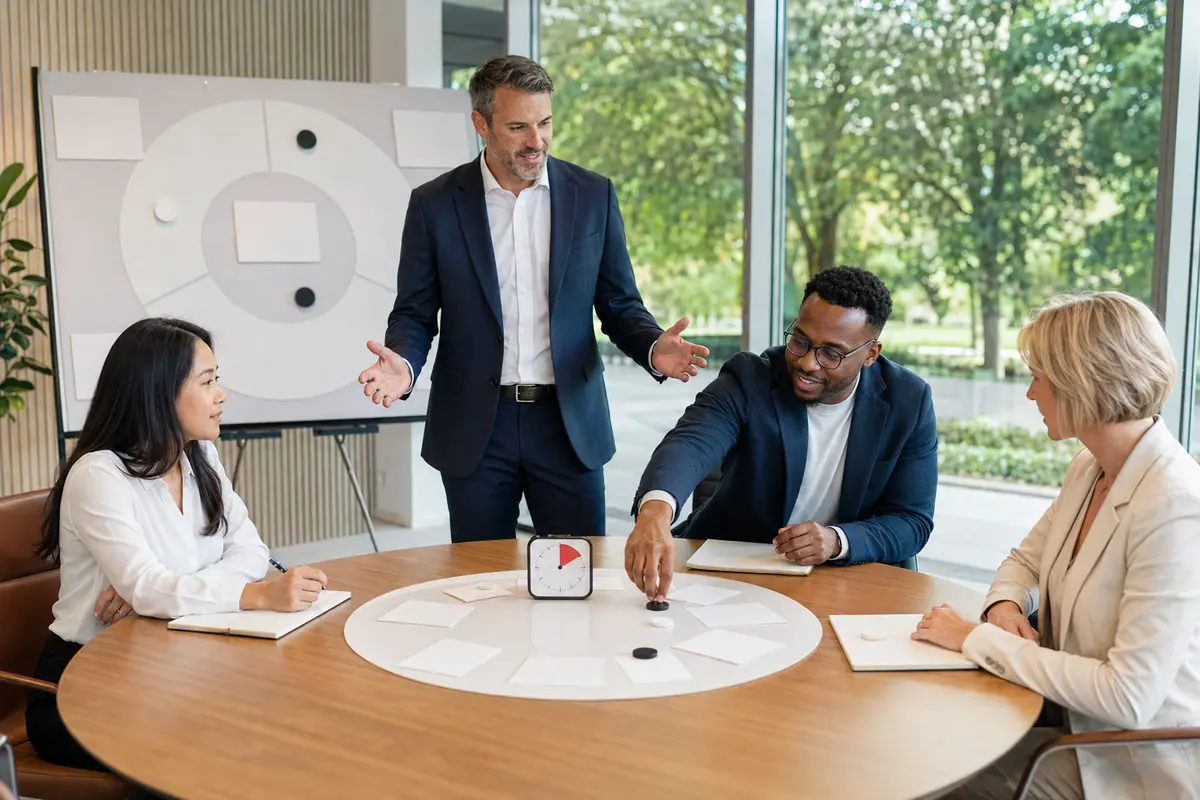
Becoming an Expert Meeting FacilitatorPractice practical tools and improve work effectiveness.

Leading Multicultural TeamsDevelop leadership team da culture capability through practical business scenarios.

Sales CommunicationDevelop communication trong ban hang capability through practical business scenarios.
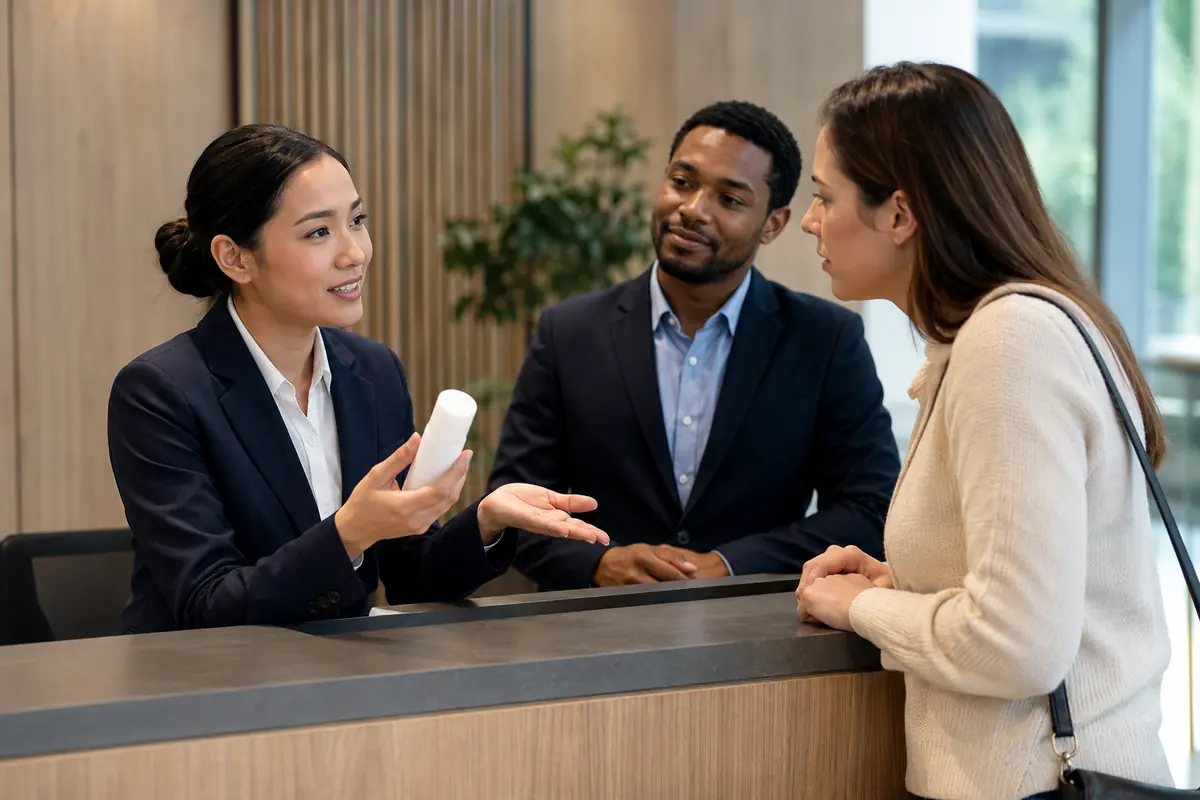
Customer Service CommunicationDevelop communication customer service capability through practical business scenarios.
Ready to strengthen building a collaborative culture based on a giving mindset capability for your team?
Masterskills experts are ready to advise on a Building a Collaborative Culture Based on a Giving Mindset program tailored to your organization’s goals and business context.