
Copyrighted Course MaterialsStandardized content updated according to course objectives.







Course
Visual Management Skills
Visual Management Skills
Provide practical methods for making work status, standards, abnormalities and priorities visible so teams can respond faster and manage operations more consistently.
Table of Contents
1. Course Introduction
Visual Management Skills is increasingly important as organizations need practical capability that connects strategy, daily execution and measurable results. Without a structured approach, teams often rely on experience alone, making outcomes inconsistent and difficult to sustain.
This course provides the concepts, tools and practice needed to strengthen visual management. Participants learn how to analyze current situations, select appropriate methods and apply them to realistic workplace cases.
The program is designed for practical application. Through discussion, exercises and guided reflection, participants build a clear action orientation and prepare to transfer learning into their own work environment.
2. Learning Objectives
- Explain the core principles and business value of visual management.
- Analyze current practices, gaps and risks related to visual management principles.
- Use practical tools and templates to apply visual standards and workplace information in workplace situations.
- Coordinate with relevant stakeholders and communicate expectations clearly during implementation.
- Handle common obstacles, deviations or resistance without losing focus on objectives.
- Build an action plan to apply, monitor and sustain improvements after the course.
3. Target Participants
- Plant Managers and Production Leaders Need to improve productivity, quality, equipment reliability and shop-floor operating discipline.
- Production, Maintenance and Engineering Supervisors Directly manage production lines, equipment, standards, abnormalities and improvement activities.
- QA, QC, IE, Lean and Continuous Improvement Staff Support data analysis, process improvement, standardization and cross-functional implementation.
- Team Leaders and High-Potential Production Staff Prepare for broader responsibility in production, maintenance or operational excellence roles.
4. Course Content
The six-part course content covers visual management principles, visual standards and workplace information, status boards and KPI visibility, abnormality detection, visual problem solving and sustaining visual routines, moving from foundation to practical workplace application.
PART 01 Visual Management Principles
- Define visual management principles and its role in visual management.
- Clarify key concepts, terms and expected outcomes.
- Identify common challenges and failure points in real work.
- Connect the module content with team performance and business results.
- Use a practical checklist or framework to analyze the situation.
- Review workplace examples and discuss lessons learned.
- Practice applying the method through a job-relevant case.
- Summarize key takeaways and actions for implementation.
PART 02 Visual Standards And Workplace Information
- Define visual standards and workplace information and its role in visual management.
- Clarify key concepts, terms and expected outcomes.
- Identify common challenges and failure points in real work.
- Connect the module content with team performance and business results.
- Use a practical checklist or framework to analyze the situation.
- Review workplace examples and discuss lessons learned.
- Practice applying the method through a job-relevant case.
- Summarize key takeaways and actions for implementation.
PART 03 Status Boards And Kpi Visibility
- Define status boards and KPI visibility and its role in visual management.
- Clarify key concepts, terms and expected outcomes.
- Identify common challenges and failure points in real work.
- Connect the module content with team performance and business results.
- Use a practical checklist or framework to analyze the situation.
- Review workplace examples and discuss lessons learned.
- Practice applying the method through a job-relevant case.
- Summarize key takeaways and actions for implementation.
PART 04 Abnormality Detection
- Define abnormality detection and its role in visual management.
- Clarify key concepts, terms and expected outcomes.
- Identify common challenges and failure points in real work.
- Connect the module content with team performance and business results.
- Use a practical checklist or framework to analyze the situation.
- Review workplace examples and discuss lessons learned.
- Practice applying the method through a job-relevant case.
- Summarize key takeaways and actions for implementation.
PART 05 Visual Problem Solving
- Define visual problem solving and its role in visual management.
- Clarify key concepts, terms and expected outcomes.
- Identify common challenges and failure points in real work.
- Connect the module content with team performance and business results.
- Use a practical checklist or framework to analyze the situation.
- Review workplace examples and discuss lessons learned.
- Practice applying the method through a job-relevant case.
- Summarize key takeaways and actions for implementation.
PART 06 Sustaining Visual Routines
- Define sustaining visual routines and its role in visual management.
- Clarify key concepts, terms and expected outcomes.
- Identify common challenges and failure points in real work.
- Connect the module content with team performance and business results.
- Use a practical checklist or framework to analyze the situation.
- Review workplace examples and discuss lessons learned.
- Practice applying the method through a job-relevant case.
- Summarize key takeaways and actions for implementation.
5. Training Methodology
The class is delivered in small groups with a learner-centered approach. The instructor presents concise concepts, facilitates discussion, leads case practice, provides feedback and helps participants convert knowledge into applied workplace behavior.
Group Discussion
Individual Exercise
Group Presentation
Brainstorming Techniques
Guided Practice with the Instructor
Experiential Project
In-Class Activities
Role-Play Activities
Class Presentation
6. Class Information
| Expected Opening Date | Schedule | Training Hours | Location | Tuition Fee | Register |
|---|---|---|---|---|---|
| To be updated | Saturday – Sunday | 08:30 – 16:30 | Ho Chi Minh City | VND 4,500,000 | Register |
| To be updated | Monday – Thursday | 18:00 – 21:30 | Hanoi | VND 4,500,000 | Register |
10% discount for early registration at least 15 days in advance, groups of three or more participants, or loyal clients.Reserve a Seat
Note:The opening schedule is tentative and may be adjusted based on the number of registered participants, class delivery conditions and the actual training plan. Masterskills will confirm the official schedule with participants before the opening date.
- Duration:2 days / 4 sessions; maximum 35 participants per class.
- Ho Chi Minh City:224 Dien Bien Phu, Ban Co Ward, Ho Chi Minh City.
- Hanoi:51 Le Dai Hanh, Hai Ba Trung Ward, Hanoi.
- Corporate In-House Training:Delivered at the office or factory; pricing is based on design scope, delivery location and class size.
- Additional Costs:Instructor travel and accommodation costs are determined by the delivery location, if applicable.
7. Learning Materials & Certification
Participants receive copyrighted course materials prepared by Masterskills, practice handouts, self-assessment forms and reference materials aligned with business situations.
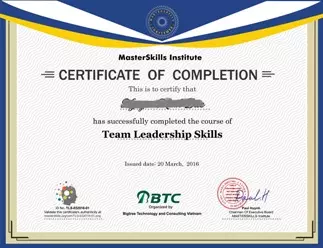
Certificate of Course Completion
Participants who meet attendance and practice requirements are awarded a Masterskills certificate of course completion.
8. Training Faculty
Masterskills instructors and experts have practical management, consulting and training experience in areas relevant to the program content.

MBA. Nguyen Thanh Binh
Production management expert. Lean Manufacturing, TPM, 5S-Kaizen and front-line management development.

MBA. Hoang Minh Nghiep
Production management and productivity improvement expert. Lean, Six Sigma, productivity management, quality and operating-system optimization.
9. Masterskills Profile
Masterskills training capabilities, areas of expertise, delivery methodology and experience partnering with organizations.

Client Feedback
View More Client Testimonials“The Visual Management Skills course provides practical content, work-relevant practice activities and clear facilitation. The instructor helps participants use suitable tools, analyze situations and build options that can be applied after the program.”
10. Representative Clients
Selected practical training programs with content close to this course topic that Masterskills has delivered for corporate clients.
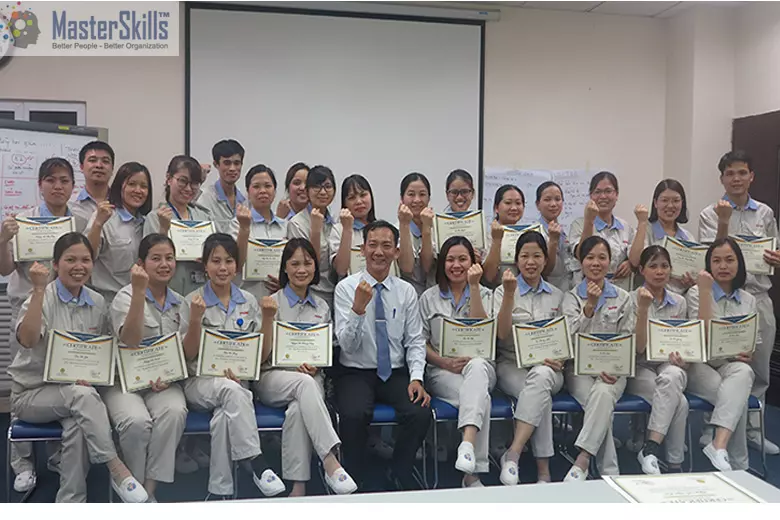 Production Supervision Skills - TWI (Train Within Industry)Co., Ltd. Molex Vietnam – Ho Chi Minh City
.webp) Quan Ly San XuatJSC Steel Builder Vietnam - Ho Chi Minh City
Quan Ly San XuatJSC Steel Builder Vietnam - Ho Chi Minh City
.webp) Communication Skills for Production TeamsCompany Dopla Asia - Vung Tau
Communication Skills for Production TeamsCompany Dopla Asia - Vung Tau
.webp) Quan Ly San Xuat Chuyen NghiepCompany GoldCoin FeedMill Long An
Quan Ly San Xuat Chuyen NghiepCompany GoldCoin FeedMill Long An
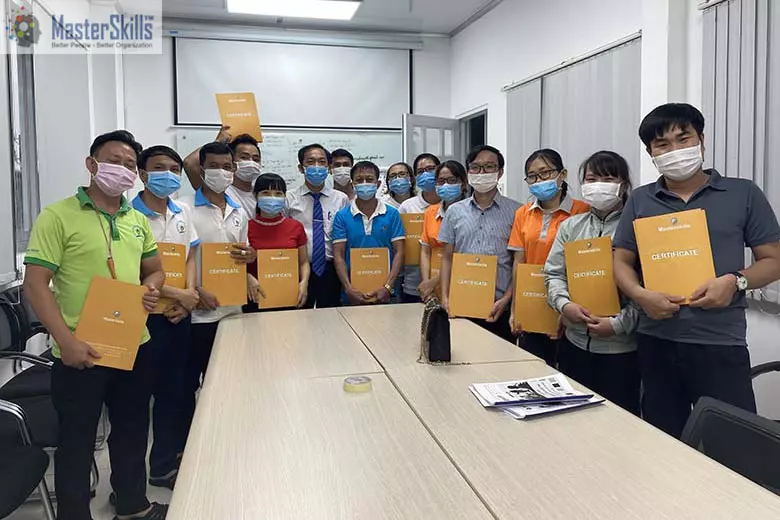 Production Supervision Skills - TWI (Train Within Industry)Co., Ltd. Nature Foods - Tinh Dong Nai
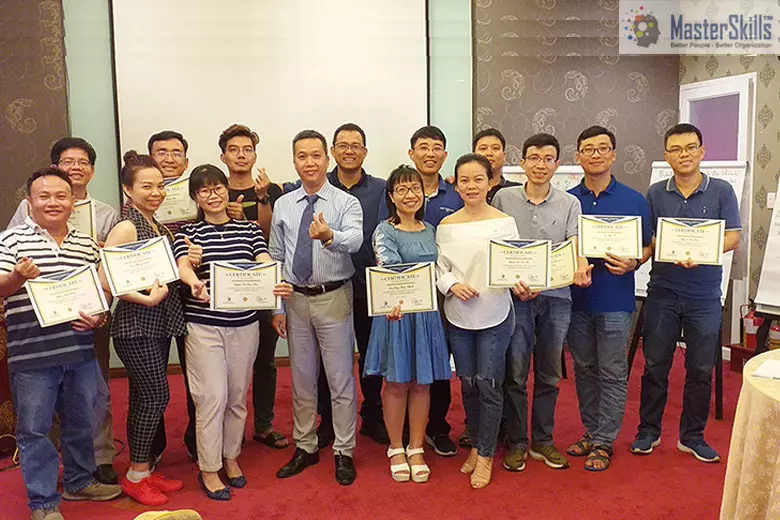 Report Writing SkillsNha May Xu Ly Khi Nam Con Son - Ho Chi Minh City
 Conflict Resolution SkillsJSC Real Estate Tien Phuoc - Ho Chi Minh City
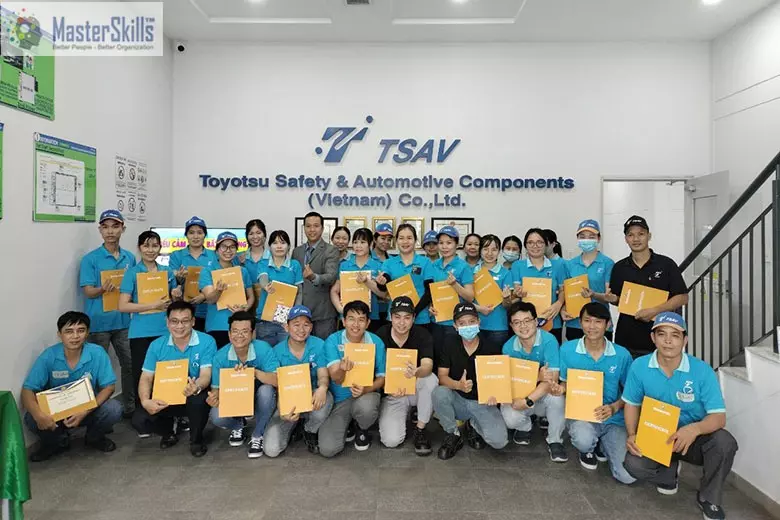 Truy Tim Nguyen Nhan Goc ReCompany Toyotsu Safety & Automotive Components Vietnam - Binh Duong
Related Courses

Product Standards ManagementDevelop capability in product standards management through practical situations.

Production Line BalancingDevelop capability in production line balancing through practical situations.

Production PlanningDevelop capability in production planning through practical situations.

Factory Layout Design and OptimizationPractice practical tools and improve work effectiveness.

Production Forecasting and PlanningPractice practical tools and improve work effectiveness.

Production Reporting SkillsDevelop capability in production reporting skills through practical situations.
Ready to develop visual management capability for your team?
Masterskills experts are ready to advise on a Visual Management Skills program aligned with your business objectives.