
Copyrighted Course MaterialsStandardized content updated according to course objectives.






Course
Conflict Resolution Skills
Conflict Resolution Skills
Equip participants to identify causes, select appropriate strategies and facilitate dialogue to resolve disagreements and conflicts collaboratively.
Table of Contents
1. Course Overview
Conflict may arise from differences in goals, roles, resources, working methods or communication styles. If avoided or handled emotionally, conflict can damage relationships and work results.
The course helps participants analyze the nature of conflict, recognize personal response styles and select appropriate strategies for different situations.
Participants practice emotional control, questioning, interest clarification and collaborative solution building.
2. Training Objectives
- Analyze causes, severity and stakeholders in a conflict situation.
- Identify personal conflict-handling style and select appropriate strategies.
- Control emotions, wording and behavior in tense dialogue.
- Use listening, questions and interest clarification to reduce confrontation.
- Build agreements and action plans that maintain collaborative relationships.
3. Target Participants
- Leaders and managersHandle conflicts within teams or between departments.
- Team leaders and supervisorsResolve disagreements during execution.
- HR, employee relations and HRBP professionalsSupport dialogue, mediation and working relationships.
- Project and cross-functional personnelWork in environments with diverse goals and interests.
4. Course Content
The program combines core concepts, practical tools, scenario discussion and guided exercises to support application in daily work.
PART 01 Understanding Conflict
- Concept of disagreement and conflict in the workplace.
- Difference among disagreement, tension and conflict.
- Common causes of team conflict.
- Positive and negative impacts of conflict.
- Levels of conflict escalation.
- Mindset of resolution instead of avoidance.
PART 02 Conflict-Handling Styles
- Understand five conflict-handling styles.
- Recognize avoidance, competition and compromise.
- Analyze collaboration and accommodation.
- Assess personal style under pressure.
- Choose a response based on context.
- Apply a simplified Thomas-Kilmann model.
PART 03 Emotional Control and Dialogue
- Recognize emotions before reacting.
- Control voice and body language.
- Listen actively when views differ.
- Ask clarifying questions instead of judging.
- Express needs using “I” messages.
- Pause when emotions escalate.
PART 04 Collaborative Problem Solving
- Identify the core issue to resolve.
- Collect information from stakeholders.
- Separate facts from emotions and assumptions.
- Find common ground and shared interests.
- Propose mutually acceptable options.
- Agree on actions, responsibilities and deadlines.
PART 05 Interest-Based Negotiation and Mediation
- Translate positions into real interests.
- Create options rather than force decisions.
- Negotiate based on win-win principles.
- Use a third party when mediation is needed.
- Manage power and perceptions of fairness.
- Provide feedback when the other party is defensive.
PART 06 Preventing Repeated Conflict
- Establish team coordination rules.
- Clarify roles, responsibilities and authority.
- Communicate expectations before problems emerge.
- Give early feedback to prevent accumulated disagreement.
- Build a culture of respecting differences.
- Follow up on commitments after resolution.
5. Training Methodology
Classes are conducted in small groups with a learner-centered approach. The facilitator provides concise input, then guides discussion, scenario practice, feedback and debriefing so participants can convert knowledge into applicable workplace behavior.
Group Discussion
Individual Exercises
Group Presentations
Brainstorming Techniques
Facilitated Practice
Experiential Projects
In-Class Activities
Role-Play Activities
Class Presentations
6. Class Information
| Expected Opening Date | Schedule | Time | Location | Tuition Fee | Register |
|---|---|---|---|---|---|
| To be updated | Saturday – Sunday | 08:30 – 16:30 | Ho Chi Minh City | VND 4,500,000 | Register |
| To be updated | Monday – Thursday | 18:00 – 21:30 | Hanoi | VND 4,500,000 | Register |
10% discount for registration at least 15 days in advance, groups of three or more learners, or loyal clients.Reserve a Seat
Note: The opening schedule above is tentative and may be adjusted depending on registration numbers, class organization conditions and the actual training plan. Masterskills will confirm the official schedule with learners before the start date.
- Duration: 2 days / 4 sessions; maximum 35 learners per class.
- Ho Chi Minh City: 224 Dien Bien Phu Street, Ban Co Ward, Ho Chi Minh City.
- Hanoi: 51 Le Dai Hanh Street, Hai Ba Trung Ward, Hanoi.
- In-house corporate training: Delivered at the client’s office or factory; quotation depends on design scope, location and class size.
- Additional costs: Trainer travel and accommodation costs are determined according to the delivery location, if applicable.
7. Learning Materials & Certification
Learners receive copyrighted course materials developed by Masterskills, practice handouts, self-assessment forms and reference materials closely aligned with business situations.
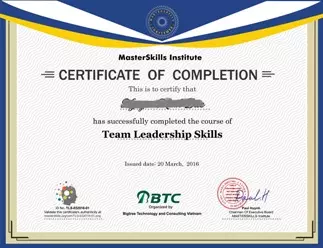
Certificate of Completion
Learners who meet attendance and practice requirements receive a Masterskills certificate of completion.
8. Faculty Team
Masterskills faculty and experts have practical management, consulting and training experience in fields aligned with the program content.

Dr. Thai Tri Dung
Human resource management and behavioral psychology expert. Leadership, managerial psychology, negotiation, culture and organizational behavior.

MBA. Paul Huynh
Leadership and capability development expert. Management skills, critical thinking, execution leadership and coaching.
9. Masterskills Profile
Masterskills’ training capabilities, areas of expertise, delivery methodology and experience partnering with organizations.
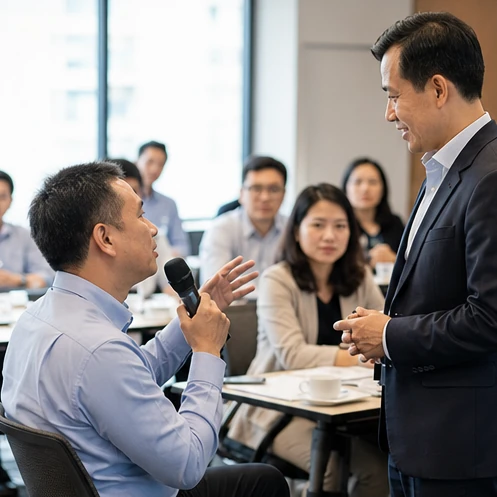
Client Testimonials
View More Client Testimonials“The conflict resolution skills course provides practical content, workplace-focused exercises and clear facilitation. The facilitator helps participants use appropriate tools, analyze situations and develop solutions that can be applied after the program.”
10. Representative Clients
Several real training programs with content close to this course topic have been delivered by Masterskills for corporate clients.
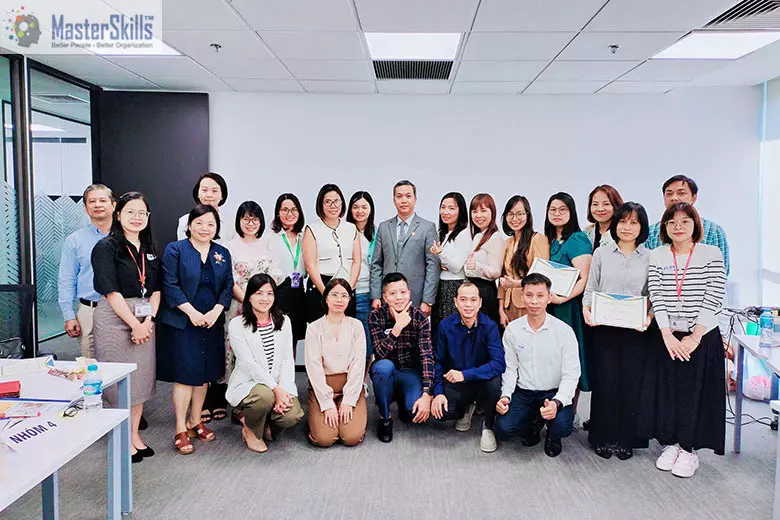 Conflict Resolution Skills (Class 1)Honda Trading Vietnam Co., Ltd. – Ho Chi Minh City
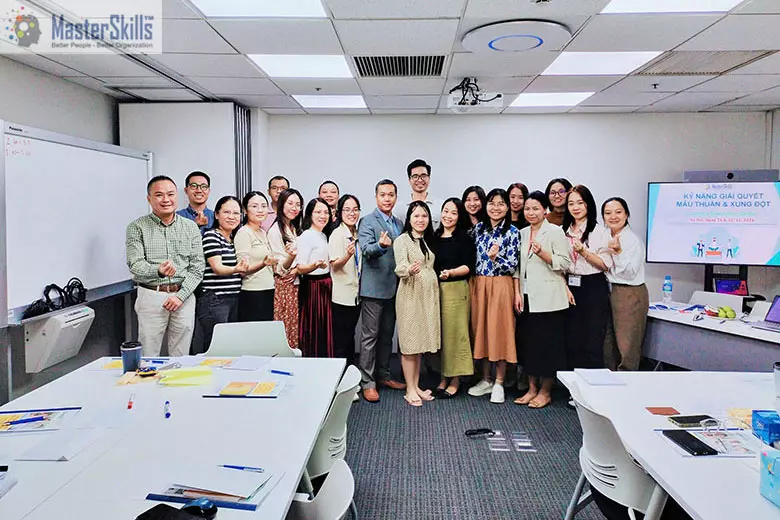 Conflict Resolution Skills (Class 2)Honda Trading Vietnam Co., Ltd. – Ho Chi Minh City
 Conflict Resolution SkillsTien Phuoc Real Estate JSC – Ho Chi Minh City
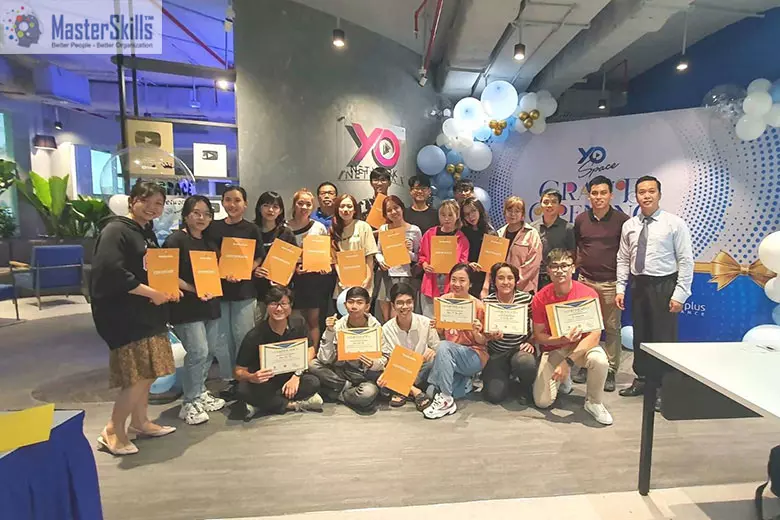 Communication and Emotional Control SkillsTuoi Tre Telecommunications Joint Stock Company – Ho Chi Minh City
.webp) Negotiation and Problem-Solving SkillsSapporo Vietnam Company - Ho Chi Minh City
Negotiation and Problem-Solving SkillsSapporo Vietnam Company - Ho Chi Minh City
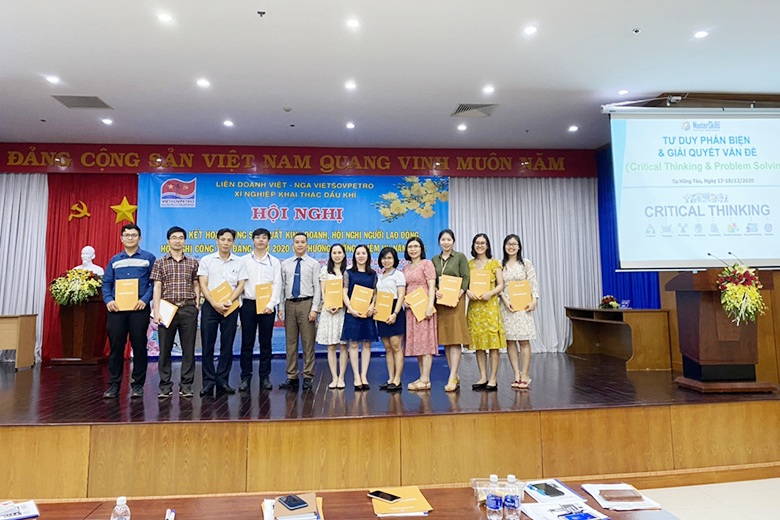 Critical Thinking and Problem-Solving SkillsVietsovpetro Petroleum Exploration Enterprise – Vung Tau
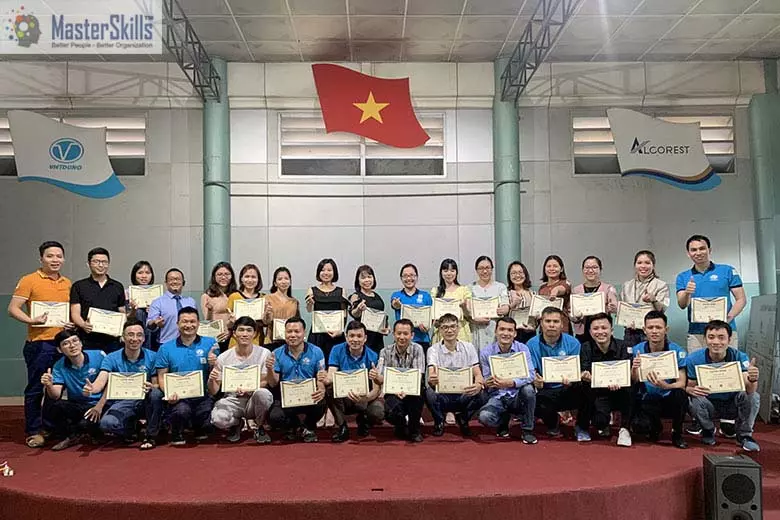 Customer Complaint HandlingViet Dung Aluminum Joint Stock Company – Ho Chi Minh City
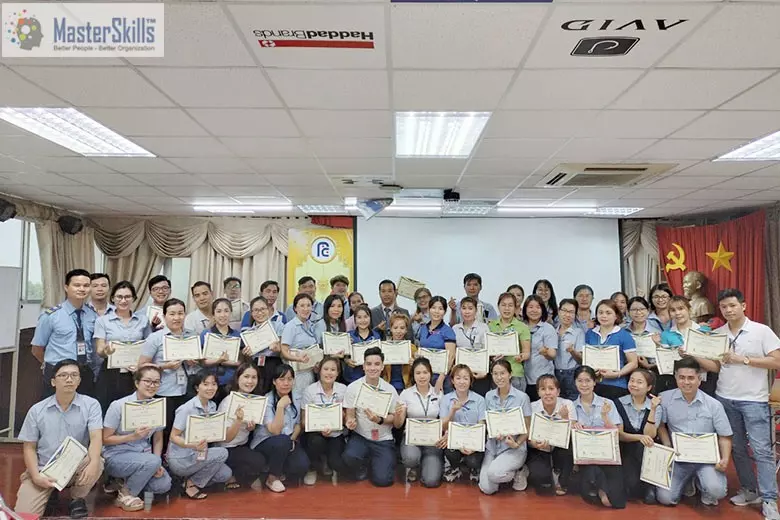 Problem-Solving SkillsFar Eastern Apparel Vietnam (FEAV) - Binh Duong Province
Related Courses

Customer Service CommunicationDevelop practical capability in customer service communication through real-world scenarios.

Communication and Interpersonal SkillsDevelop capabilities skills communication & behavior through case practical.

Cross-Cultural CommunicationDevelop practical capability in cross-cultural communication through real-world scenarios.
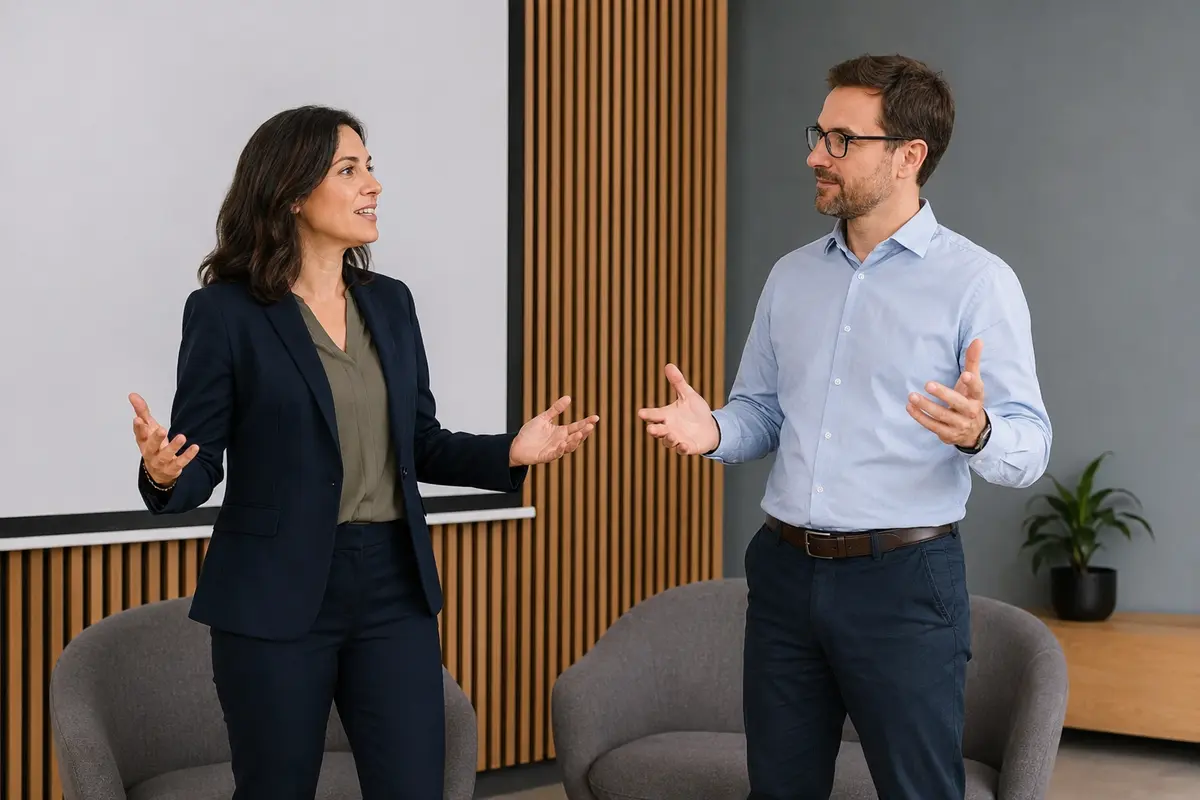
Non-Verbal Communication SkillsDevelop practical capability in non-verbal communication skills through real-world scenarios.

Social Media CommunicationDevelop practical capability in social media communication through real-world scenarios.

Sales CommunicationDevelop practical capability in sales communication through real-world scenarios.
Ready to develop conflict resolution skills for your team?
Masterskills experts are ready to advise on the conflict resolution skills program aligned with your business objectives.